A garage door that will not open is a problem with several possible causes, and the fastest way to a useful diagnosis is to arrive at the phone call with a few specific details. You do not need to touch the springs, the cables, or the opener's drive train to gather them. What you can do is notice how the door behaves when you press the button, what you hear, and what the door looks like from outside with the garage empty. Those observations tell a technician a great deal before anyone arrives. Here is what to note, and why each detail matters.
Start with what the opener does when you press the button
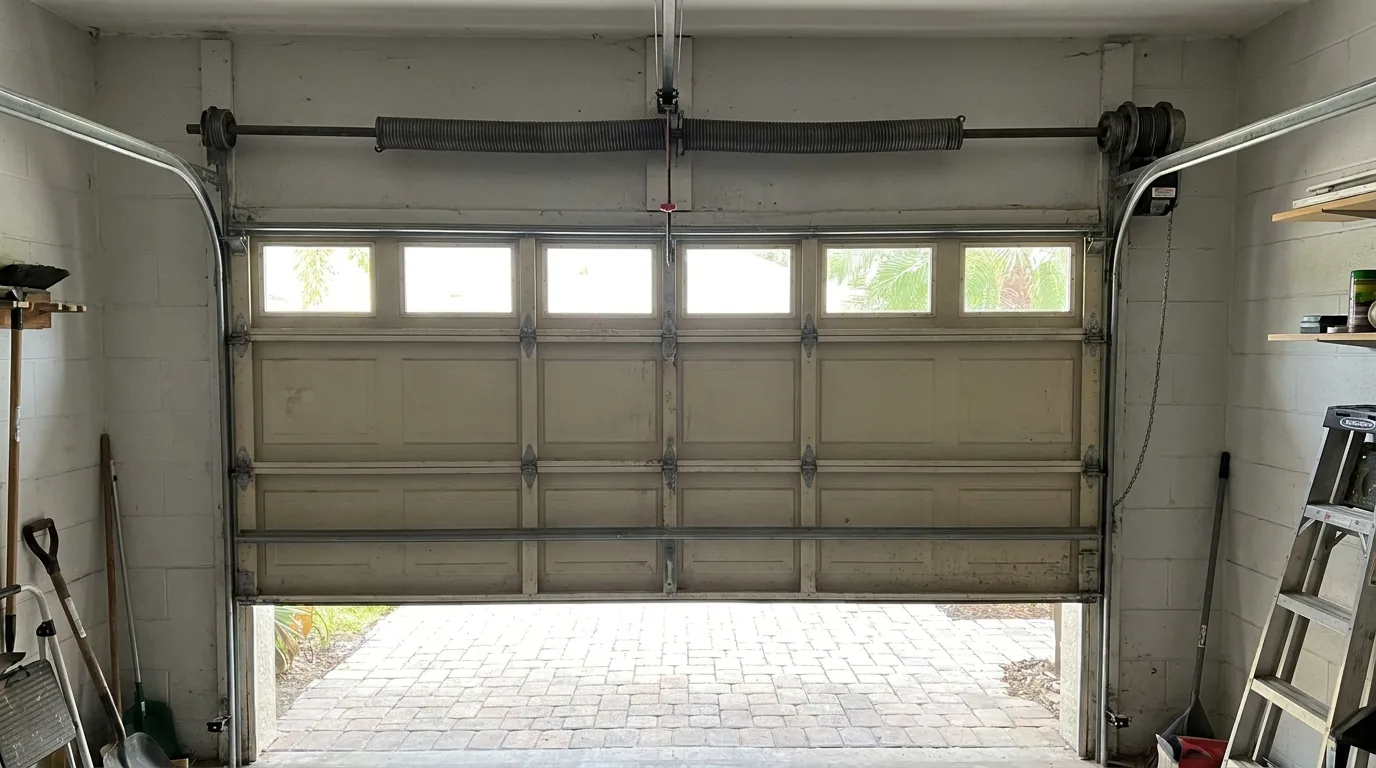
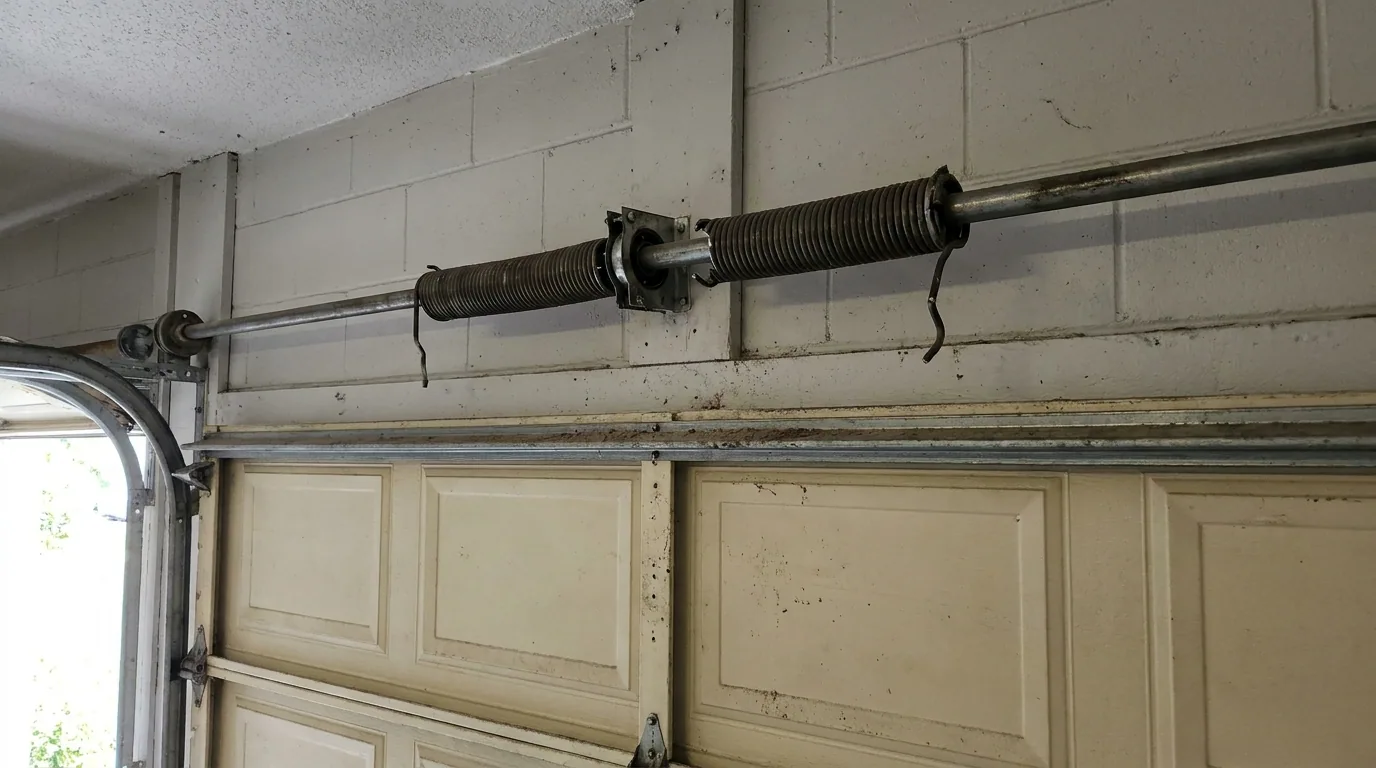
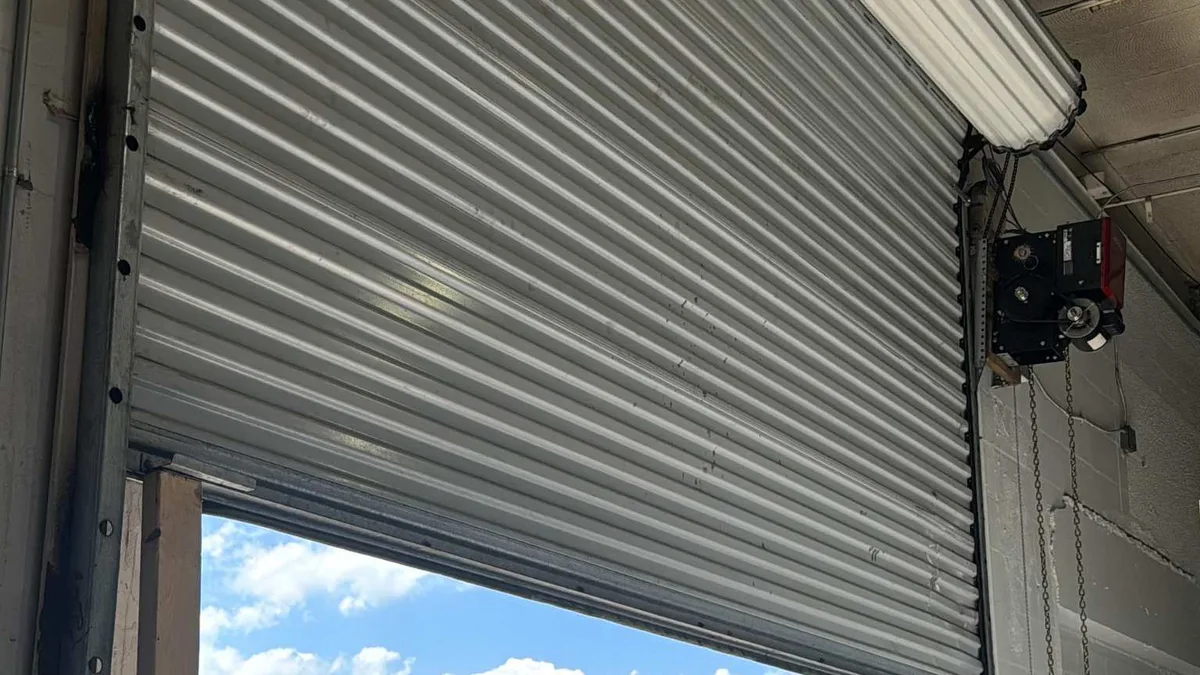
The opener's behavior narrows the problem more than almost anything else. Press the button and listen carefully. If the motor runs, you hear it humming or whirring, but the door does not move, the drive train is turning without lifting the door. One common cause is a stripped gear inside the opener, which lets the motor spin while the door stays put. Another possibility is a broken torsion spring: the opener can be working fine, but the spring that balances the door's weight is no longer holding it, so the motor cannot lift what it is being asked to lift. A snapped cable can produce a similar result, with the door hanging at an angle. These are different failures with different fixes, and a technician separates them by inspecting the springs, cables, and opener drive train directly.
If the motor does not run at all, the issue may be electrical, a tripped breaker, a dead remote battery, or a wall switch problem. Try the wall switch as well as the remote, and note whether either one produces any sound. That single detail tells the technician whether the opener is receiving power and signal.
Note whether the door moves a little and then stops or reverses
A door that starts to rise, then stops short or reverses back down, is behaving differently from a door that never moves. This pattern usually points to a travel-limit setting or a force setting that needs adjustment, not to a photo-eye problem. The photo-eye is a safety device that reverses a door while it is closing, and only while it is closing. It has no role in a door that will not start or that reverses on the way up. If your door reverses before it reaches the floor on the way down, the photo-eye is worth considering, and a technician will check whether it is blocked or misaligned. Note which direction the door was traveling when it reversed, and how far it got. That detail keeps the diagnosis on track.
Describe what the door looks like from outside, with the garage empty
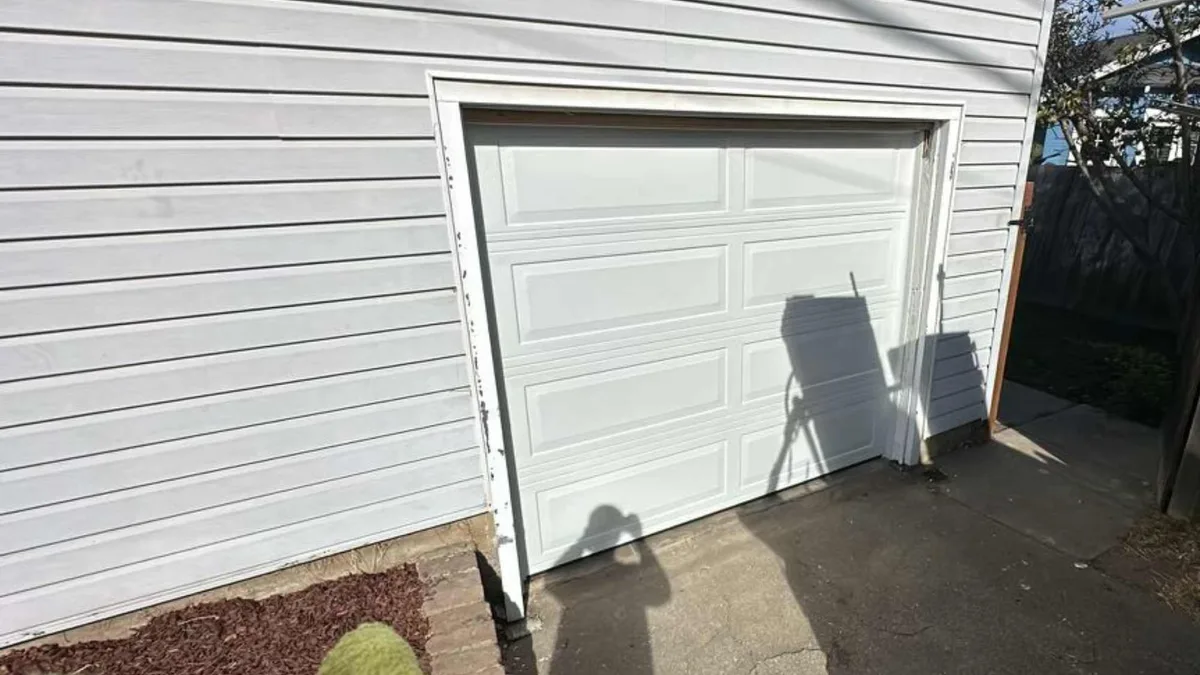
Stand outside the door with the garage empty and note what you see. Does the door sit crooked, with one side higher than the other? Is there a gap along the top or one side? A door that hangs at an angle often points to a snapped cable on one side, a broken spring, or a bent track. Those three causes produce similar symptoms, and a technician tells them apart by inspecting the cables, springs, and track. A door that looks level but will not lift may have a spring problem or an opener problem. A door that is visibly off its track needs to be left alone until a technician arrives, because forcing it can bend panels or damage the track further.
Listen for new noises and note when they happen
A new noise at the start of a cycle is worth describing. A squeal, a grind, or a bang can come from a roller, a hinge, a dry bearing, or the opener itself, and the location and timing of the sound help narrow it. Note whether the noise happens at the very start, partway up, or at the top of travel. Note whether it is louder in the morning or after the door has been sitting. Do not try to diagnose the source by hand. Describe the sound and when it occurs, and the technician will inspect the moving parts.
What to have ready when you call
When you call a garage door company, the details that help most are simple: whether the motor runs, whether the door moves at all, which direction it was traveling if it reversed, whether the door looks crooked or has a gap, and what the door sounds like. Note the door's approximate size and whether it is a single or double door. If you have the opener's model information, have it nearby. None of this requires you to touch the springs, cables, or opener drive train. Those parts hold the door's weight and store energy, and they are technician work.
If your door will not open and you are on the Treasure Coast, Torsion Pro Garage Doors can be reached at (561) 225-1433 or info@torsionpro.com. The company serves Fort Pierce, Port St. Lucie, Vero Beach, Stuart, Jensen Beach, Hutchinson Island, Sebastian, Palm City, Lakewood Park, White City, and the surrounding area, and is licensed and insured. Emergency service is available. Having your observations ready when you call helps the technician arrive prepared for the right repair.