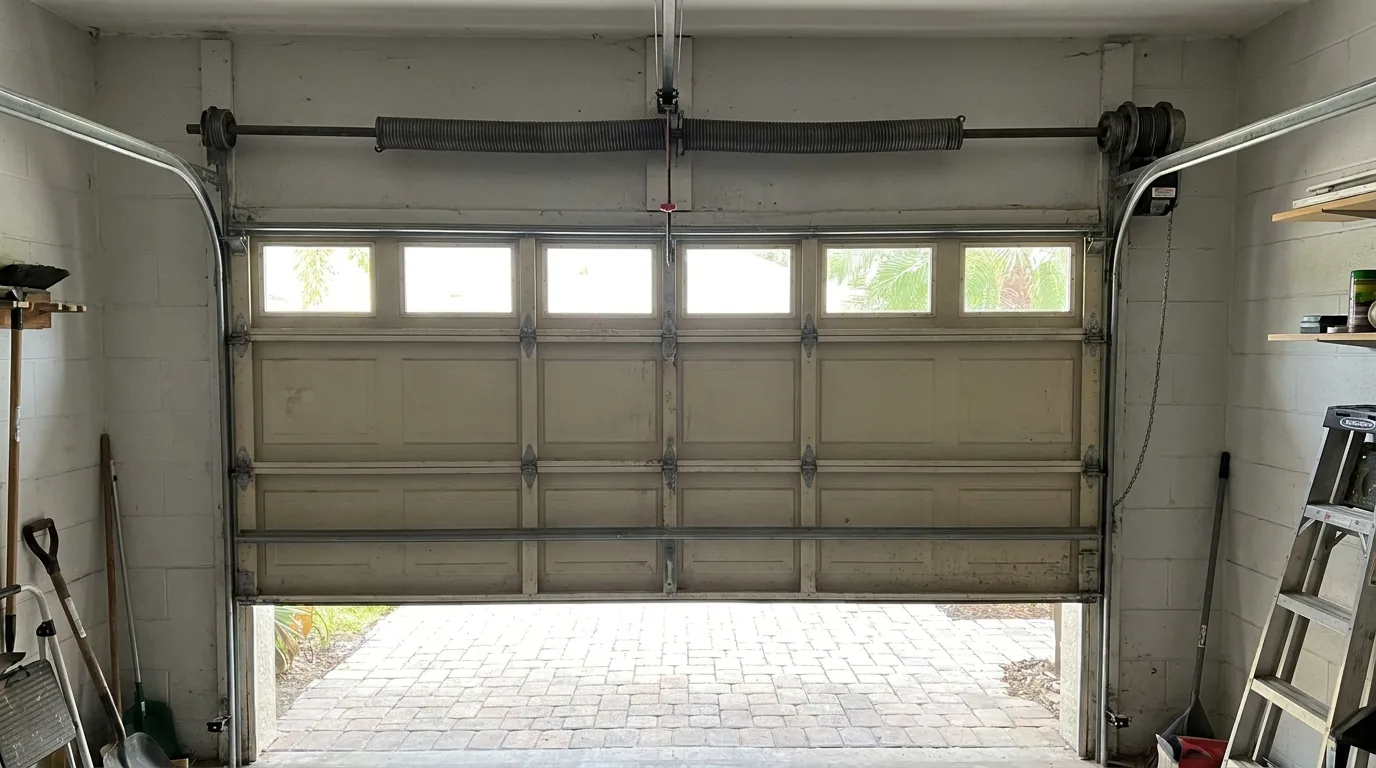
A torsion spring replacement looks like a single job from the driveway: the old spring comes off, a new one goes on, and the door should work again. In practice, the spring is only half the work. A new spring of the right size still has to be wound to the tension that matches your door's actual weight, and the door has to be balanced against that tension before the opener is allowed to run it. Skip that step and the door may move, but it will not move correctly, and the opener will spend the next year fighting a load it was never designed to carry. Here is what a technician does between installing the spring and handing the door back to you.
Why a new spring is not automatically the right tension
Torsion springs are sized by wire gauge, inside diameter, and length, and the combination determines how much lifting force the spring produces when it is wound a given number of turns. The technician matches the spring to the door's weight and track radius, but the match is a calculation, not a guarantee. The door's actual weight can differ from the nominal figure, and hardware, insulation, and panel construction all shift it. So the spring goes on, gets wound to a starting point, and then the door itself tells the technician whether that starting point is right.
This is also why a spring that is the correct part can still leave a door running badly. If the tension is short, the door feels heavy on the way up and the opener works harder than it should. If it is long, the door wants to travel up on its own and the opener has to hold it back. Neither condition is visible from the outside until something else starts wearing out.
How balance is actually checked
Balancing is done with the door disconnected from the opener, so the technician is feeling the door and the spring alone, with nothing else pushing or pulling. The door is moved to the halfway position and released. A properly balanced door holds there, or drifts only slightly, because the spring force and the door weight cancel each other through that part of the travel. A door that drops is under-sprung. A door that climbs is over-sprung. The technician adjusts the winding and repeats the check until the door behaves the same in both directions.
The balance check is repeated at several points in the travel, not just one, because the spring's assist changes as the door goes up and down. A door can hold at halfway and still be wrong near the top or the bottom. This is technician work throughout. The springs are under load during the adjustment, and the door is being moved without the opener's control, which is exactly the combination that makes this a job for someone with the right winding bars and the training to use them.
What gets adjusted alongside the spring
A spring replacement is a good moment to correct the small things that make a balanced door run unevenly. The technician will typically check and set the following:
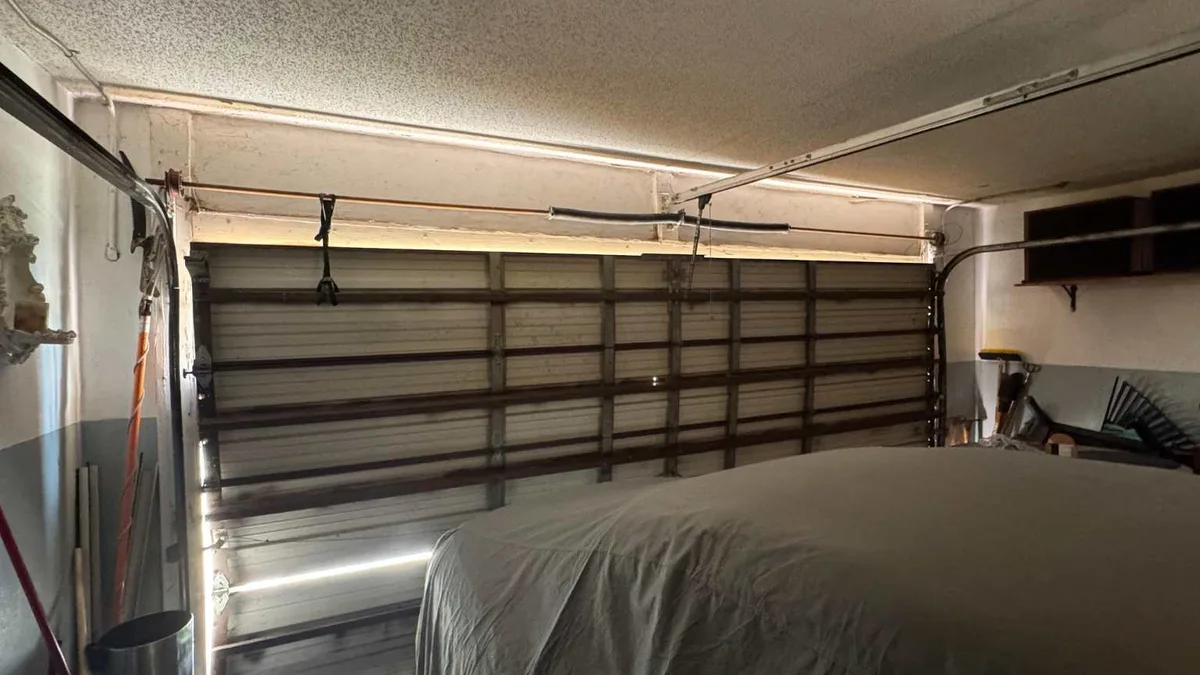
- Cable tension and drum seating. A cable that is not sitting correctly in its drum pulls one side of the door harder than the other, and no amount of spring winding will fix that.
- Track alignment. Tracks that are out of plumb or pinched narrow will bind a roller and make a balanced door feel heavy in one spot.
- Roller and hinge condition. A dry or flat roller adds drag that the spring has to overcome, which shows up as a door that will not hold its balance position.
- The opener's force and travel settings. Once the door is balanced, the opener is re-engaged and its limits and force settings are set to suit the door as it now runs.
None of this is optional decoration. Each item changes how the door loads the spring, and a spring that is asked to compensate for a binding track or a bad roller will not last as long as one that is not.
Why the opener settings get reset last
An opener's force setting is there to detect an obstruction, not to overcome a heavy door. If the door is out of balance and the installer simply turns the force up until the door moves, the safety function is weakened and the opener is worked beyond its design. The correct order is balance first, then re-engage the opener, then set the travel limits and force so the opener is doing only its intended share: starting the door, controlling speed, and stopping it at the right points. A door that has just had a spring replaced and is still tripping its force setting is telling you the balance or the hardware is not right yet.
Safety devices are checked at the same time. A photo-eye that is blocked or misaligned will reverse a door that is closing, and only while it is closing; it has no role in a door that will not start or that reverses before it reaches the floor. Those are travel-limit or force-setting problems, and they are separated from a photo-eye fault by watching when in the cycle the reversal happens.
What you can watch for after the work is done
You do not need to test anything by hand, and you should not. What you can do is use the door normally for the first few cycles and note what you notice. A door that sits crooked, a gap along the top when it is closed, a door that feels heavier in normal use, or a new noise at the start of a cycle are all worth a phone call. Any of them can point to more than one cause, and the technician sorts out which by checking the springs, cables, and track directly.
If something does not seem right after a spring replacement in Fort Pierce, Port St. Lucie, Vero Beach, or anywhere else on the Treasure Coast, Torsion Pro Garage Doors can be reached at (561) 225-1433 or info@torsionpro.com. The company is licensed and insured, and emergency service is available.