A torsion spring rarely fails in silence, but the loud part comes at the end. The bang homeowners describe hearing from inside the house is the sound of a spring that has already let go, not a warning. The useful sounds are the ones that come before that, spread over weeks or months, and they are easy to mistake for the door being old or the opener being tired. This is what those sounds tend to be, what each one points toward, and where the line sits between something you can note down and something a technician needs to check.
What a spring actually does, and why it gets noisy
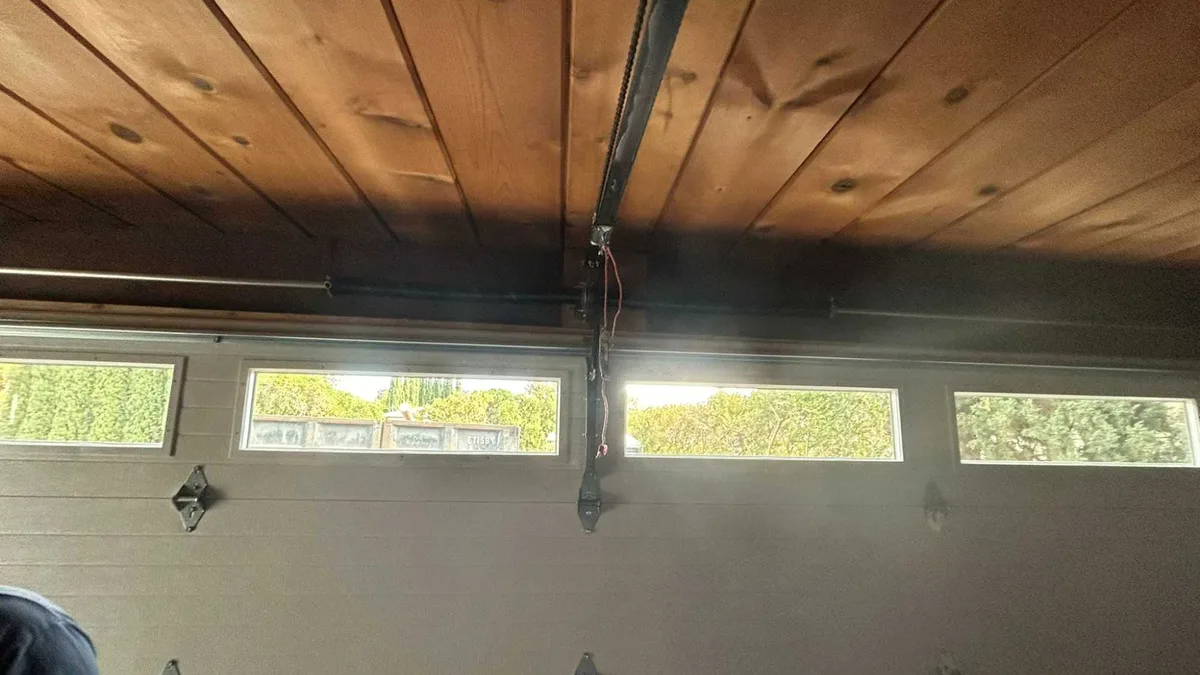
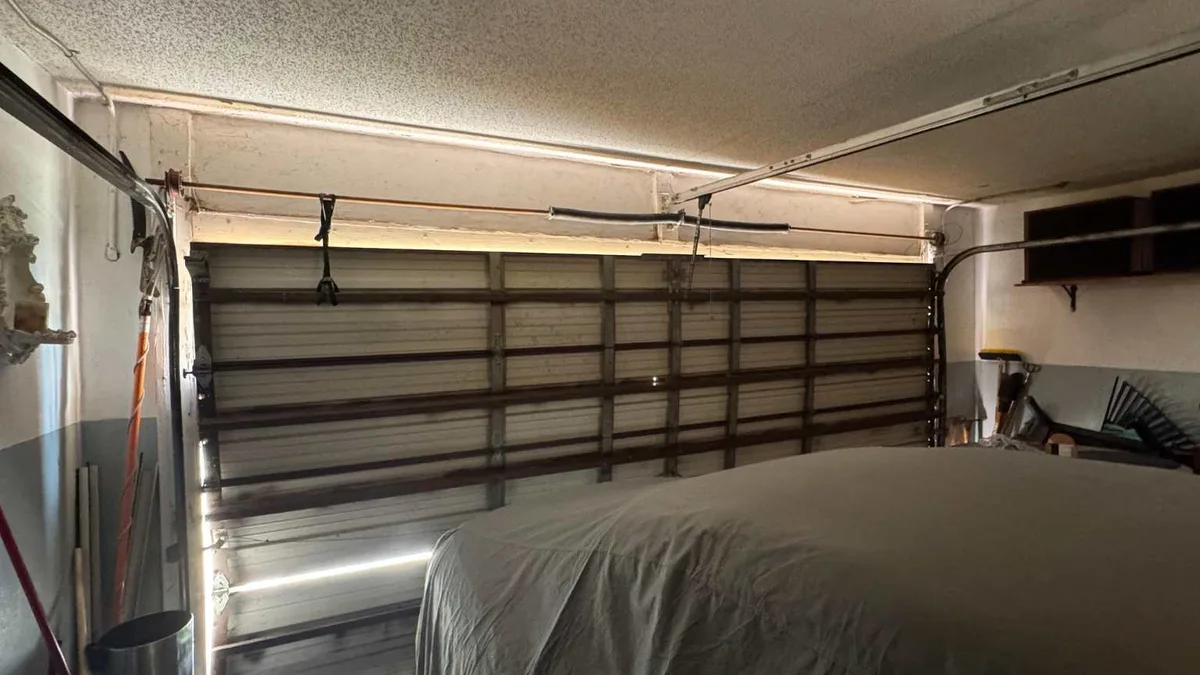
A torsion spring is a wound coil of steel mounted on a shaft above the door. It is wound tight during installation so that it stores energy, and that stored energy does most of the work of lifting the door. The opener's job is to start the door moving and control it; the spring carries the weight. Every opening and closing winds and unwinds the coil a little, and after enough of those cycles the steel fatigues. Fatigue does not announce itself with a single event. It accumulates, and the sound a spring makes as it approaches failure is the sound of a coil that is no longer moving as freely or as evenly as it was designed to.
The sounds worth paying attention to
Most of what a homeowner can safely gather is audible. You do not need to climb a ladder or put your hands near the springs to notice these, and you should not.
- A sharp metallic crack or pop at the start of a cycle. This is a single sound, not a repeated one, and it often happens as the door first moves. It can come from a spring, from a hinge, or from a roller that has stopped turning. A technician separates them by running the door and listening at each component in turn.
- A squeal or screech that rises and falls with the door's travel. Squeals have several possible sources: a dry bearing, a worn roller, a hinge that has lost its lubrication, or a spring that is binding as it winds. The pitch and where in the travel it occurs are what tell a technician which one it is.
- A grinding or rumbling sound that was not there before. This often points toward the shaft, the bearings at either end of it, or the opener's drive train rather than the spring itself, but the only way to know is to have it traced.
- A single loud bang, followed by a door that will not lift or lifts only a few inches. This is the failure itself. A broken torsion spring cannot hold the door's weight, and the door will not open normally afterward. Stop operating the door and call for service.
What you can see from the floor without touching anything
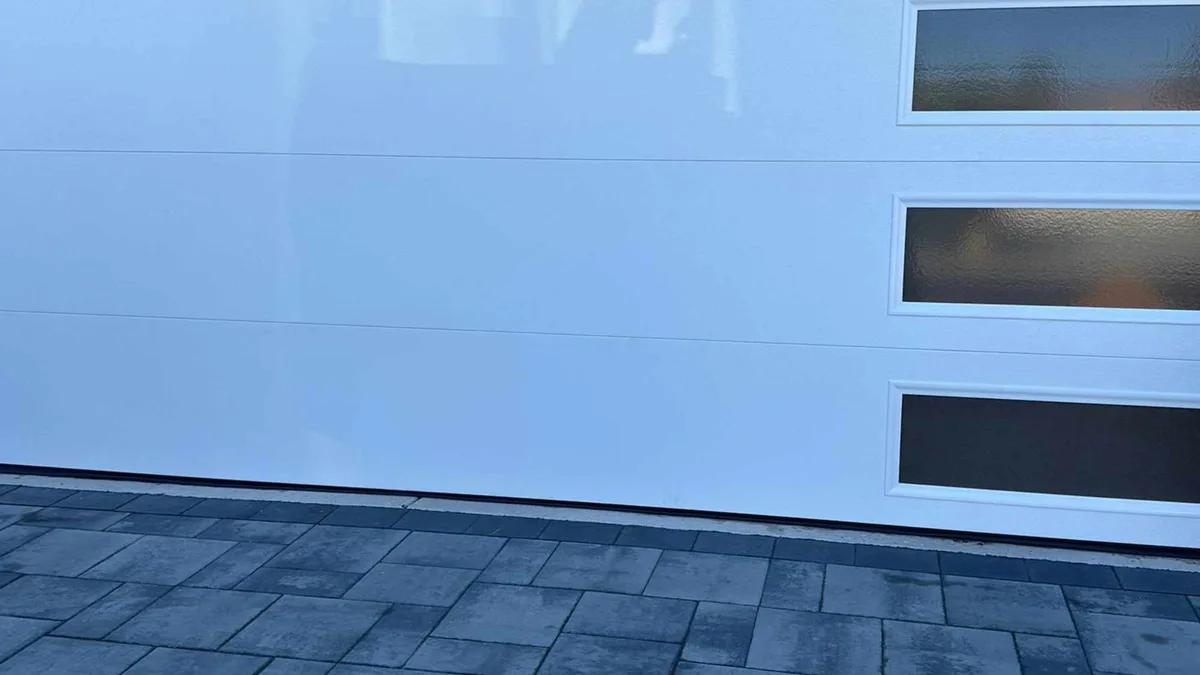
Sound is only part of the picture, and the rest is visible from outside the door with the garage empty. A door that sits crooked in its opening, with one side higher than the other, is telling you something. So is a gap along the top of the door that was not there before, or a door that no longer meets the floor evenly. These can mean a snapped cable, a broken spring, or a track that has been bent or pushed out of alignment, and the appearance alone does not tell you which. A technician checks the springs and cables directly and traces the door's travel to find the cause.
The other thing you may notice is that the door feels heavier when you use it normally, or that the opener strains more than it used to. That is worth mentioning when you call. Do not try to confirm it by lifting the door by hand or by testing the balance yourself; that is technician work, and a door running on a damaged spring can behave unpredictably.
Why the sound alone does not name the cause
A noise is a symptom, and most garage door noises have more than one possible source. That is not a reason to ignore them, but it is a reason not to assume. A pop at the start of a cycle could be a spring, a hinge, or a roller. A squeal could be a bearing, a roller, or a binding coil. A grinding could be the shaft bearings or the opener. The test that separates them is a technician running the door and listening at each part in sequence, then checking the springs and cables directly. That is how a cause gets named rather than guessed at.
There is one case where the cause is not in doubt. A bang followed by a door that will not lift means a spring has broken. A broken torsion spring cannot carry the door's weight, and no adjustment to the opener will change that. The door should stay down until it is repaired.
What to do when you hear something
Write down what you heard, when in the cycle it happened, and whether it was a one-time event or something that repeats. Note anything else that changed around the same time: the door sitting unevenly, a gap at the top, the opener running longer than usual, or the door reversing before it reaches the floor. That last one is a travel-limit or force-setting issue rather than a spring problem, and it is worth describing separately. If the door will not open at all, or if you heard a bang and the door stopped working, leave it closed and call for service.
Torsion Pro Garage Doors works on springs, cables, and balance across the Treasure Coast, including Fort Pierce, Port St. Lucie, Vero Beach, Stuart, Jensen Beach, Hutchinson Island, Sebastian, Palm City, Lakewood Park, and White City. The company is licensed and insured, and emergency service is available. Reach the office at (561) 225-1433 or info@torsionpro.com, or visit 2603 Bennett Dr, Fort Pierce, FL 34946. Weekday hours are 7:00 AM to 7:00 PM, and weekend hours are 8:00 AM to 6:00 PM.