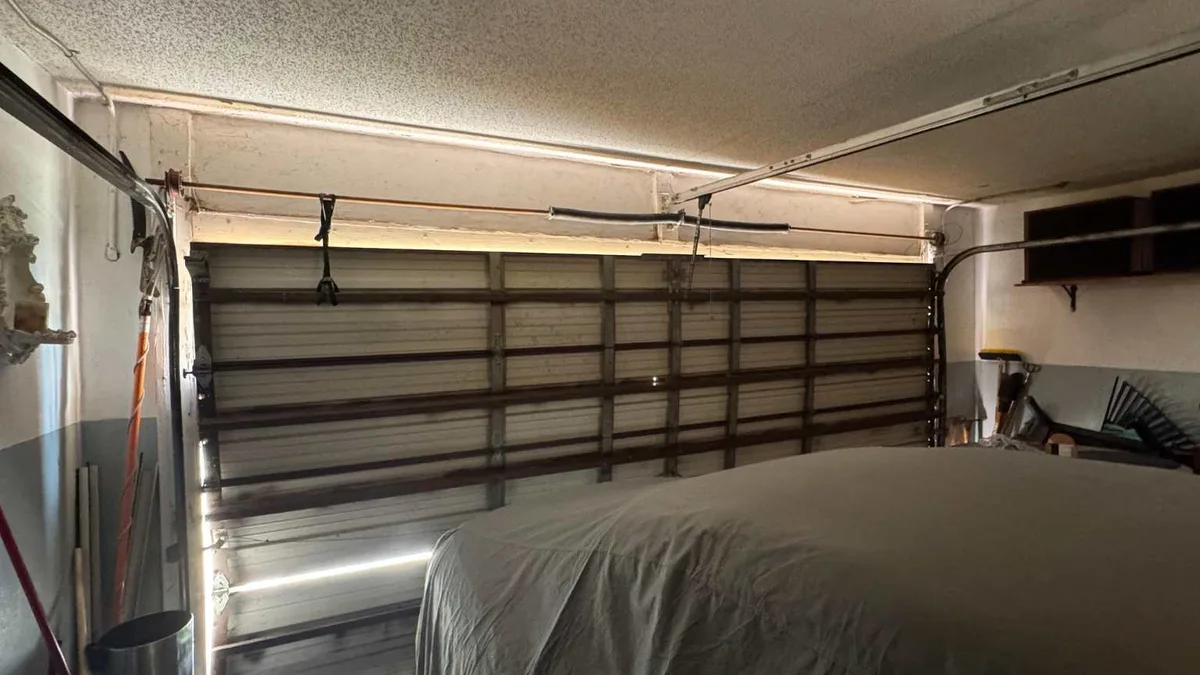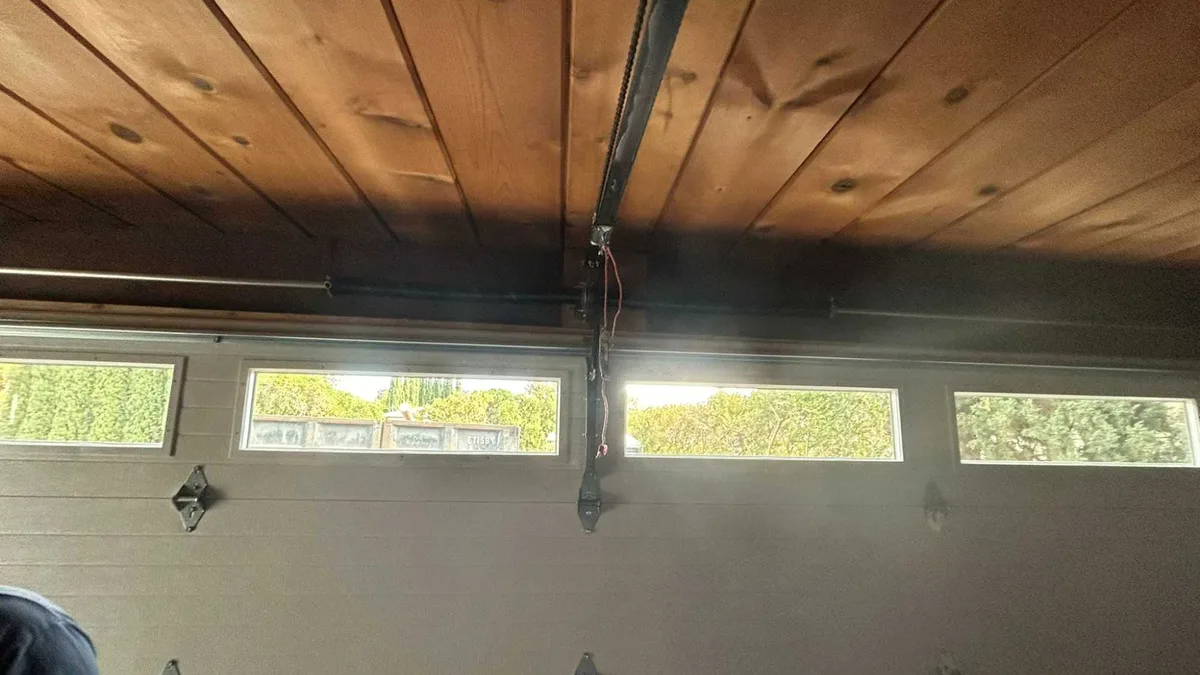
A snapped cable is one of those garage door failures that looks like a single broken part but behaves like a system event. The cable itself is a braided steel rope that runs from the bottom corner of the door up through a pulley and onto a drum at the end of the torsion shaft. There are usually two, one per side, and they do the same job the chains on a lift do: they keep the door's two sides moving together and they connect the door's weight to the counterbalance above. When one lets go, the door does not simply lose a cable. It loses the thing that was keeping it square, and everything else in the system starts working against a load it was not designed for.
What the cable was doing before it broke
On a torsion-spring door, the springs carry the weight and the cables transmit it. The spring is wound around a shaft above the door; when the door closes, the spring winds tighter, and when it opens, the spring unwinds and lifts. The cable is what ties the bottom of the door to that spring tension. It runs down the side of the track, around a pulley at the bottom, and attaches to a bracket on the bottom panel. Because the cable is anchored at the bottom corner, it also sets the door's alignment. Both cables, working against the same shaft, keep the left and right sides of the door at the same height as it travels.
That is why a snapped cable changes more than the cable. The moment one side loses its connection to the spring, the other side is still being pulled. The door hangs at an angle, the panels twist slightly in the tracks, and the rollers on the affected side ride differently against the track profile.
The immediate effects: a crooked door and a strained system
The first thing most homeowners notice is that the door sits crooked, with one side low. That is mechanically certain with a snapped cable: the side that lost its cable is no longer being held up by the spring, so it drops. The door may also jam partway, because the twisted panels bind in the tracks. What is not certain is how much else has been affected. A door that has dropped on one side can bend a track, pop a roller out of the track, or put a sudden load on the spring on the other side.
The opener is part of this too. If the door is crooked and binding, the opener is now pushing or pulling against a jammed door. That can strip the opener's gear, wear the trolley, or trip the force setting so the door reverses. None of that is guaranteed, but it is the reason a snapped cable should be treated as a system problem rather than a single-part replacement.
What a technician checks beyond the cable
When a technician arrives for a snapped cable, the cable is the starting point, not the whole job. The door is first secured so it cannot move unexpectedly, because a door hanging on one cable is unstable. Then the technician inspects the springs and cables, the tracks, the rollers, the hinges, and the bottom brackets. The springs are checked for damage or uneven tension, since a cable failure can shock-load the spring on the opposite side. The tracks are checked for bends or spreads, especially near the bottom where the door dropped. The rollers are checked for flat spots or broken stems, and the bottom brackets are checked for deformation.
The technician also checks the door's balance after the new cable is installed. A door that is not balanced will load the opener unevenly and can cause the new cable to wear prematurely. Balance is set by the spring tension, and adjusting it is technician work: it involves winding or unwinding the springs with the proper tools. Homeowners should not attempt to adjust springs, cables, or the opener drive train.
Why the other cable usually gets replaced too
Cables on a garage door are a matched pair. They are installed at the same time, they carry the same load, and they age at the same rate. When one snaps, the other is usually at or near the end of its service life. A technician will often recommend replacing both cables together, because a second failure shortly after the first is common. That is not a sales tactic; it is a recognition that the remaining cable has the same cycles on it and has just been through the shock of the first failure.
Replacing both also makes it easier to set the door's alignment correctly. With one new cable and one old one, the stretch characteristics differ, and the door may not sit level even when the tension is set properly.
What you can watch for from outside the door
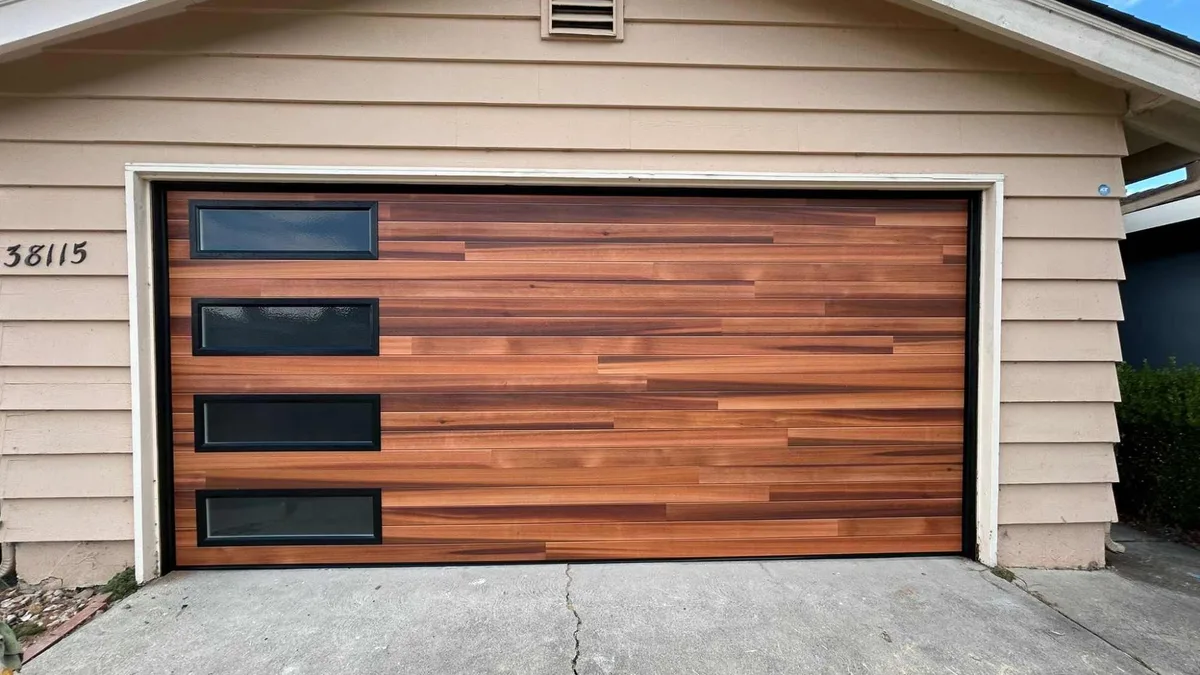
With the garage empty and the door closed, you can see whether the door sits level across the opening. A gap along the top on one side, or a bottom panel that is closer to the floor on one side, is a sign the door is not square. You may also notice the door feels heavier when you use it normally, or that it makes a new noise at the start of a cycle. Those observations are useful to pass along when you call. They are not a diagnosis, and they are not a reason to try to move the door by hand or to pull the emergency release. A door with a compromised cable can fall.
If you see a crooked door, keep it closed and call a technician. Torsion Pro Garage Doors serves the Treasure Coast of Florida, including Fort Pierce, Port St. Lucie, Vero Beach, Stuart, Jensen Beach, Hutchinson Island, Sebastian, Palm City, Lakewood Park, and White City. The company is licensed and insured, and can be reached at (561) 225-1433 or info@torsionpro.com. Emergency service is available.