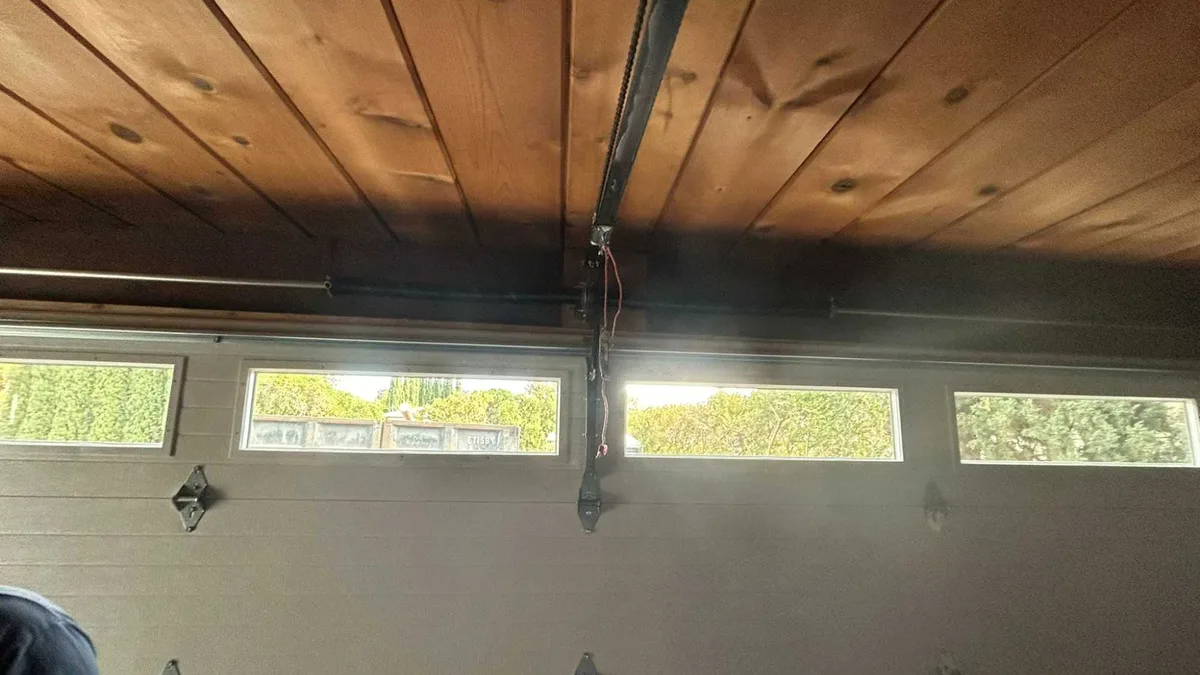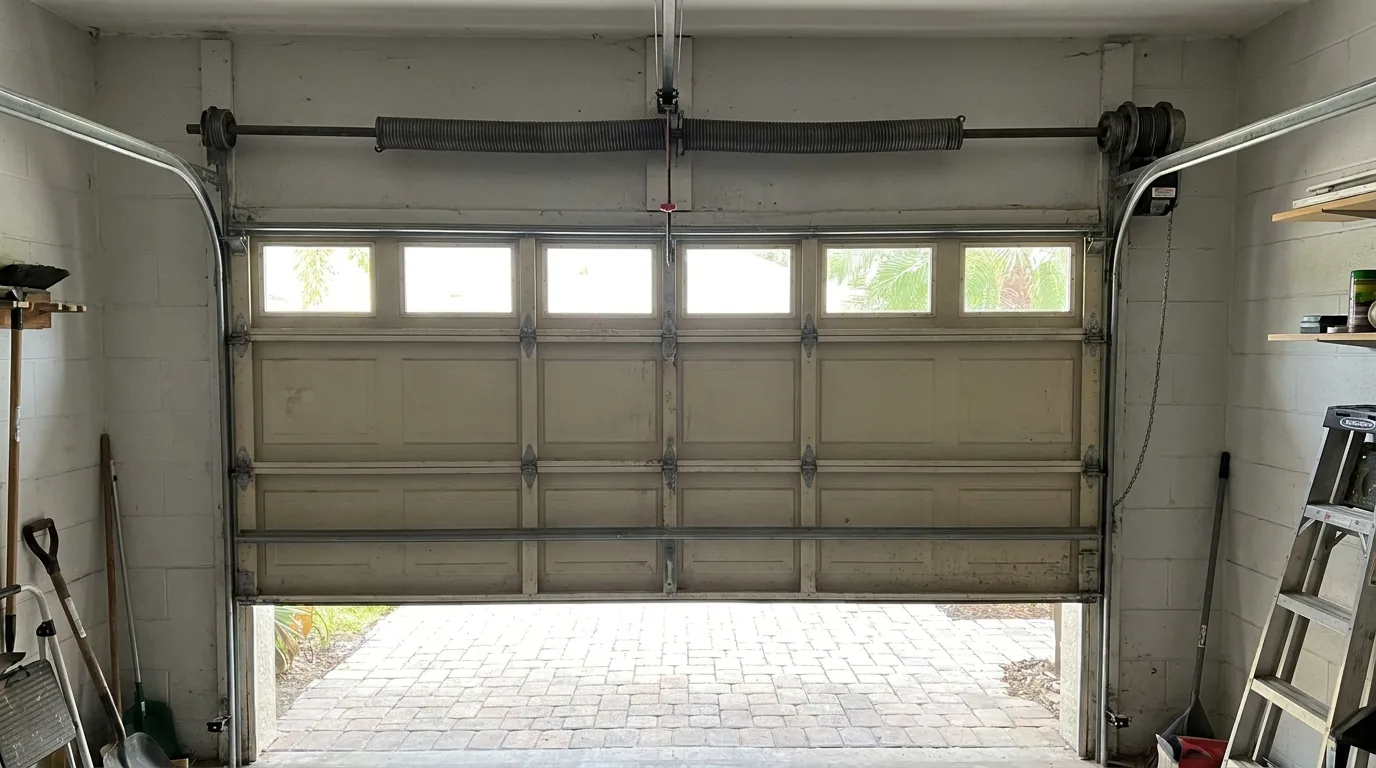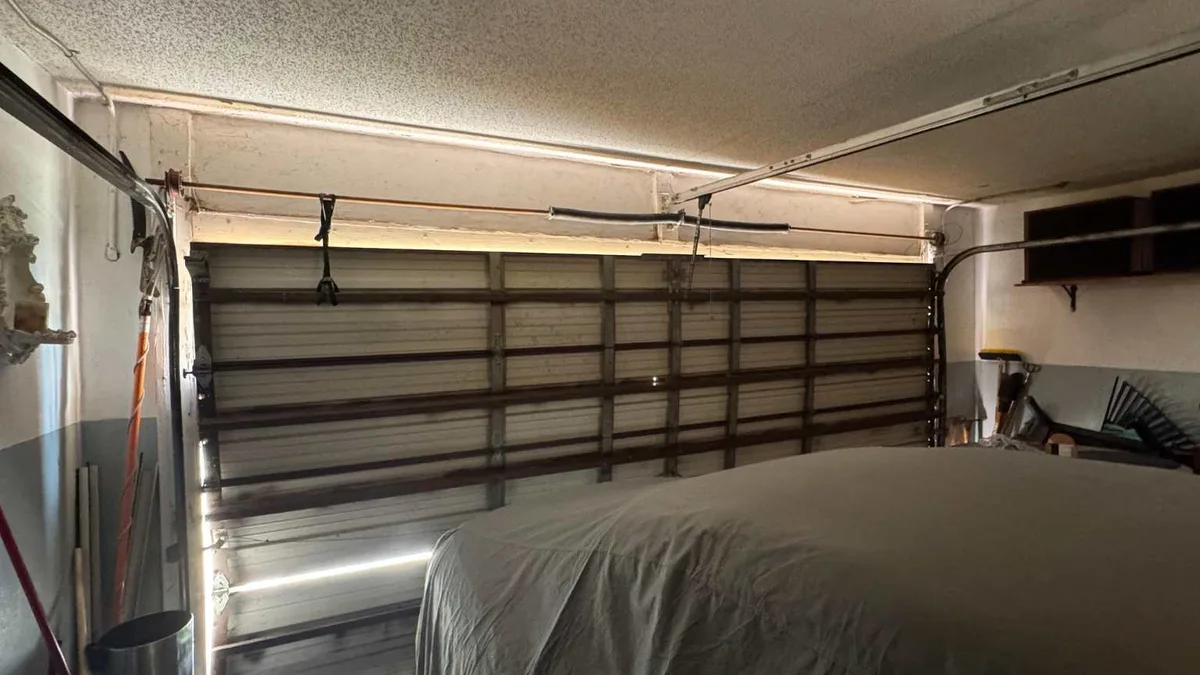
When a torsion spring breaks, the garage door stops working. The opener may hum and stall, the door may lift a few inches and drop back, or it may not move at all. The obvious fix is to replace the broken spring. But on most residential doors there are two torsion springs on the shaft above the door, and replacing only the one that snapped is a decision that affects how the door behaves from then on. Here is what a technician considers when a homeowner asks whether one spring is enough.
Why two springs are paired in the first place
Two springs share the weight of the door. Each is wound to carry roughly half the load, which is why a pair can be made from lighter wire than a single spring doing the same job. When both are in good condition the door is balanced: it travels evenly, the opener is not straining, and the door sits where you leave it. The two springs are installed at the same time and they cycle together, so they accumulate the same number of windings and the same fatigue. When one breaks, the other is not a fresh part. It has lived the same life as the one that just failed.
What the surviving spring is doing right now
With one spring broken, the remaining spring is carrying the entire door on its own. It was not sized for that. A door in this condition is not balanced, and the opener, the cables, and the tracks are all taking load they were not designed to carry. This is why a door with one broken spring should be left closed until a technician arrives. Do not cycle it to see whether it still works. Every attempt adds stress to a part that is already doing double duty.
The problem with mixing a new spring and an old one
If a new spring is installed beside the surviving old one, the two are no longer a matched pair. The new spring is at full strength; the old one has already been through the cycles that broke its partner. They will not share the load the way the original pair did, and the door's balance is set by the pair, not by each spring individually. A technician checking the door afterward may find it does not sit level, that it drifts, or that the opener is working harder than it should. The mismatch is the reason many technicians recommend replacing both springs together when they were installed as a pair.
How a technician decides between one spring and two
The decision is not automatic. A technician looks at several things before recommending parts:
- Whether the door was built with one spring or two. Some doors use a single spring by design. On those, replacing the one spring is the correct repair.
- The condition of the surviving spring. Rust, gaps between coils, or a spring that has lost tension are signs it is near the end of its life.
- Whether the springs were installed together. A matched pair that has cycled together is usually replaced as a pair.
- The door's weight and balance after the repair. The technician checks that the door travels evenly and that the opener is not straining.
None of this can be settled by looking at the door from the floor. The springs are under tension, and the assessment requires the tools and training to release and measure that tension safely.
What you can observe without touching anything
You do not need to handle the springs, cables, or opener to give a technician useful information. Stay on the floor and note what you see and hear. Does the door hang level in the closed position, or is one side lower? Did you hear a bang from the garage? Is the opener running but the door not moving, or is the opener silent? These observations help narrow down the cause before anyone arrives, but they are not a diagnosis. A door that hangs at an angle, for example, may have a snapped cable rather than a spring problem, and the two are handled differently.
Why this is not a homeowner job
Torsion springs store a large amount of energy. Releasing or winding one without the correct tools and technique can cause serious injury, and an incorrectly wound spring can leave the door unbalanced and dangerous to operate. The same applies to the cables and the opener drive train. If your door has a broken spring, or if it is not opening smoothly, the safe course is to leave it closed and call a technician who can assess the whole system, not just the part that failed. Torsion Pro Garage Doors serves the Treasure Coast, including Fort Pierce, Port St. Lucie, Vero Beach, Stuart, and the surrounding communities. You can reach them at (561) 225-1433 or info@torsionpro.com.