A garage door's springs get most of the attention, but they never lift the door alone. The springs hold the stored force, and the cables and drums are what transfer that force to the door's bottom corners. When a cable frays or a drum wears, the door may still open for a while, but the two sides stop agreeing with each other, and that is when the trouble starts. Here is how the parts wear, what you can safely notice, and what a technician checks to tell one problem from another.
What the cables and drums actually do
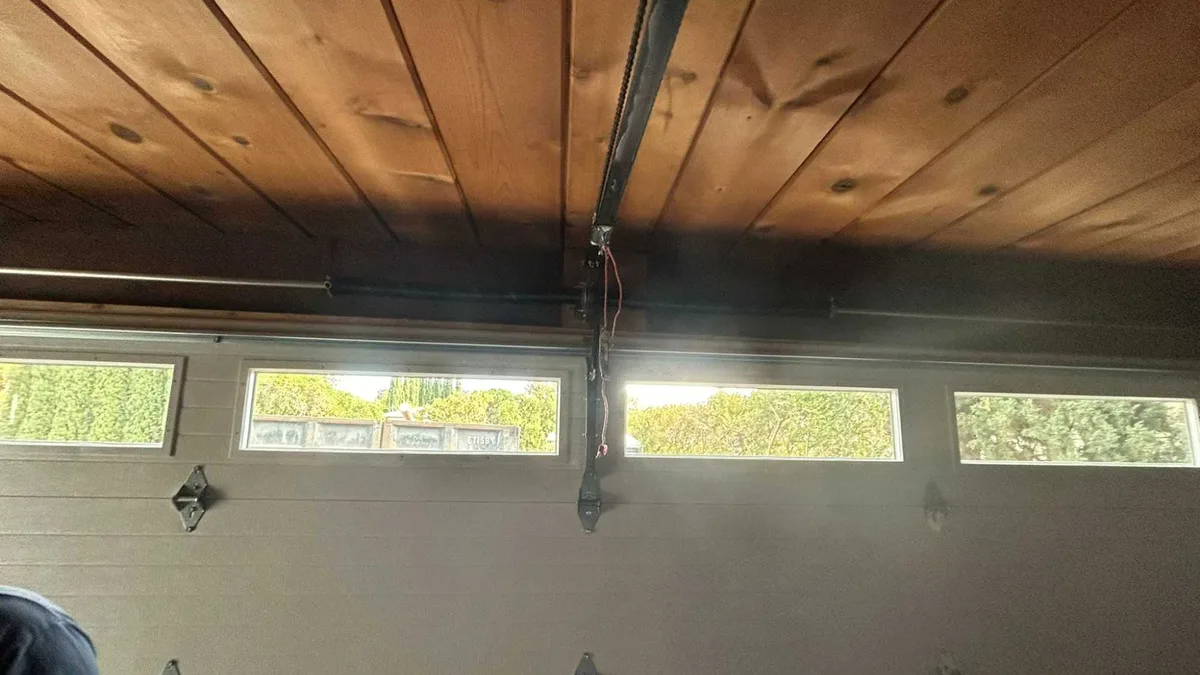
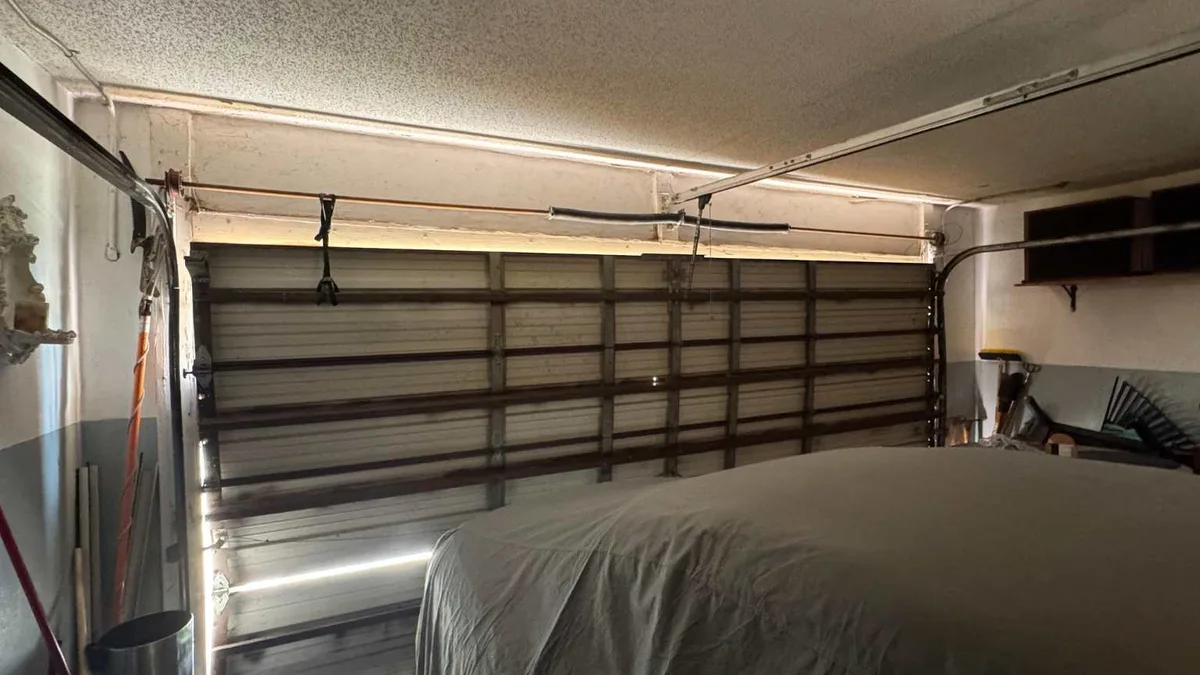
On a torsion-spring door, the springs are wound around a shaft above the door. At each end of that shaft is a drum, and a braided steel cable runs from the drum down the side of the track, around a pulley at the bottom, and onto a bracket at the bottom corner of the door. The cable ties the door's weight to the spring tension. Because there is one cable per side, the pair also keeps the door square as it travels.
The drum is the spool that the cable winds onto as the door closes and unwinds from as the door opens. Its groove guides the cable so it lays in even coils. If the cable jumps the groove or the drum's surface wears, the cable starts stacking unevenly, and the two sides begin carrying different amounts of the load. That is the beginning of most drum-and-cable problems.
How cables wear out
A cable does not usually snap without warning. It wears gradually, and the wear shows up in a few predictable ways:
- Strand breakage. The cable is made of many small strands braided together. Individual strands can break over time, and the cable loses strength before the whole rope lets go.
- Wear at the pulleys and drums. The cable bends around the pulley at the bottom of the track and winds onto the drum every cycle. Those are the points where it flexes most, and where wear concentrates.
- Rubbing and misalignment. A cable that rubs against a track, a bracket, or the edge of a drum wears faster than one running cleanly in its groove.
- Corrosion. In coastal air, moisture and salt can attack the strands, and a cable can lose strength from the inside before anything shows on the outside.
What a homeowner can safely notice is a change in how the door behaves in normal use: the door sitting crooked when closed, a gap along the top, the door feeling heavier than it used to, or a new noise at the start of a cycle. A technician inspects the cables and drums directly and can tell you whether a cable is worn, whether it has jumped its drum, and whether the drum itself needs replacing.
How drums wear out
The drum is a wear part in its own right. Its groove is what keeps the cable in line, and over thousands of cycles the groove can widen, the edge can chip, and the drum can develop a wobble on the shaft. A drum that no longer guides the cable cleanly lets the cable stack up on one side, and the door starts to hang unevenly. Drums are also matched to the door's size and track radius, so a replacement has to be the right one for your door, not just a similar-looking part.
A drum problem and a cable problem can produce the same symptom, which is why a technician checks both together rather than replacing whichever part looks worst.
What a crooked or heavy door can mean
A door that sits tilted, rises at an angle, or feels heavier than usual has several possible causes, and a snapped cable is only one of them. A broken torsion spring can also leave the door hanging unevenly, and a bent or misaligned track can make one side lag. The test that separates them is a technician's inspection: the springs, cables, drums, and track are checked as a system, and the door is checked for balance before anything is run.
If a cable has snapped, the door will usually hang at an angle and should not be operated. The cable is under spring tension, and moving the door by hand or with the opener can let the remaining side take a load it was not meant to carry. That is technician work, and it should be treated as such.
When to call a technician
Some symptoms are worth a call right away: a door that hangs crooked, a door that will not open or closes unevenly, a loud bang from the garage, or a door that feels noticeably heavier in normal use. Others can wait for a service visit but should not be ignored: a new noise at the start of a cycle, a door that seems to shift slightly as it closes, or a cable that has started to look different from the other side. A technician can inspect the cables, drums, springs, and track together and tell you which parts are worn and which are still serviceable.
If your door is not working or you are due for service, Torsion Pro Garage Doors serves the Treasure Coast of Florida, including Fort Pierce, Port St. Lucie, Vero Beach, Stuart, Jensen Beach, Hutchinson Island, Sebastian, Palm City, Lakewood Park, and White City. The company is licensed and insured. Call (561) 225-1433 or email info@torsionpro.com. Weekday hours are 7:00 AM to 7:00 PM, weekend hours are 8:00 AM to 6:00 PM, and emergency service is available. The address is 2603 Bennett Dr, Fort Pierce, FL 34946.