When a torsion spring lets go, it usually announces itself with a bang from the garage. After that, the door may refuse to open, or it may come up a few inches and stop. Homeowners often ask whether the spring can simply be swapped for a new one of the same size. Sometimes it can. But the spring has to match the door it is lifting, and on the Treasure Coast, where humidity and salt air work on metal year-round, the parts around it deserve a look at the same time. Here is what a technician is actually doing when a torsion spring is sized for a garage door.
What a broken spring tells you
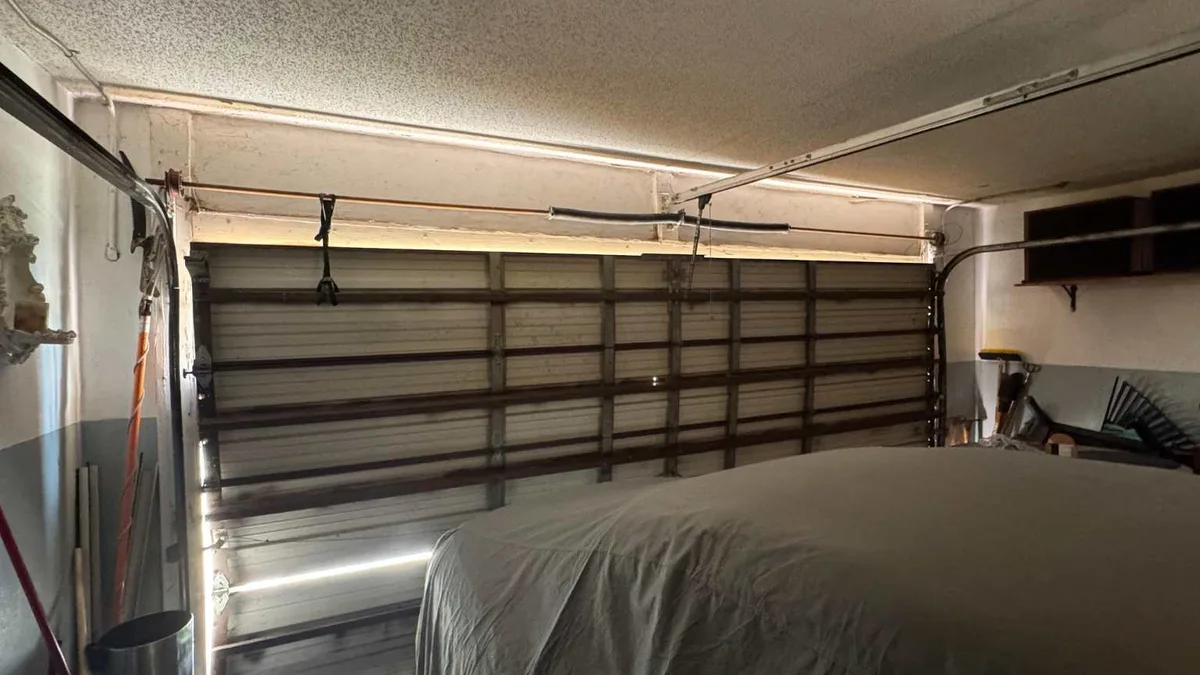
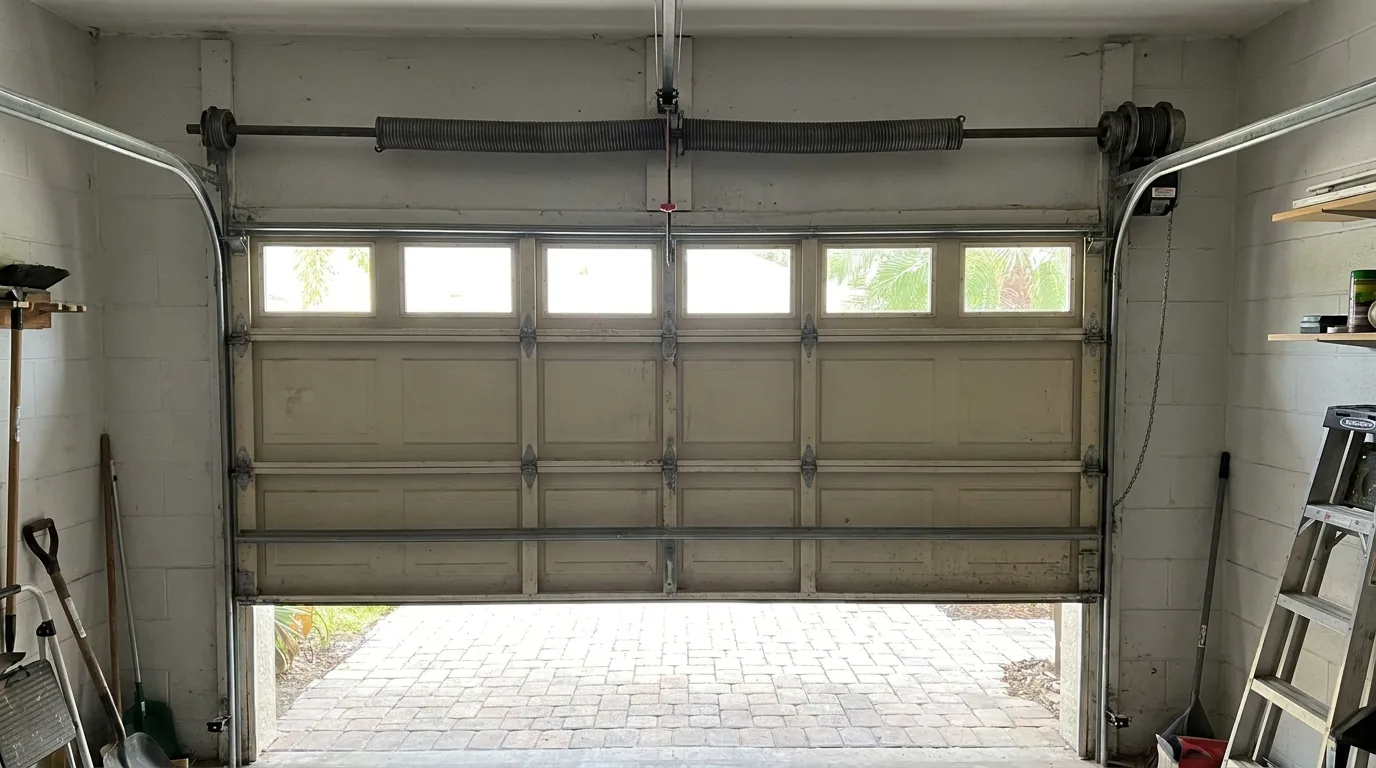
A torsion spring is a coiled steel bar that stores energy as it winds, then releases that energy to help lift the door. When the coil separates, the counterbalance is gone. The door's full weight now rests on the opener, the cables, and the tracks, and none of those parts are designed to carry it. That is why a door with a broken spring often behaves strangely: the opener may hum and stall, the door may come down hard, or a cable may jump its drum. If you hear a bang and the door will not lift, leave it closed and call for service. Do not try to open it by hand, and do not run the opener to see what happens.
Why the replacement spring has to match the door
A torsion spring is not a universal part. It is selected to produce a specific amount of lifting force at a specific number of turns, and that force has to line up with the weight of the door and the hardware attached to it. A spring that is too weak leaves the opener straining and the door heavy at the bottom of its travel. A spring that is too strong can make the door feel light in the middle but hard to control at the ends, and it puts extra load on the cables, drums, and center bearing plate. Neither situation is something a homeowner can correct by adjusting the opener.
What a technician measures before ordering a spring
Sizing starts with the door itself, not the old spring. A technician will look at the door's width and height, its material and construction, and whether it has windows, insulation, or a reinforced bottom section. From those details, the door's weight can be established. The technician also checks the torsion assembly: the size of the torsion bar, the condition of the drums and cables, and whether the center bearing plate and end plates are sound. If the old spring is still intact enough to read, the wire diameter, inside diameter, and overall length stamped on it can be compared against what the door actually requires. If the markings are worn off, the measurements are taken directly. This is why a spring is not ordered over the phone from a photo of the broken coil.
How the spring's dimensions translate into lift
Three numbers define a torsion spring: the thickness of the wire, the diameter of the hollow center, and the length of the coil. Together they determine how much torque the spring can produce and how many turns it can safely accept. A technician calculates the turns needed to counterbalance the door, winds the spring to that point, and then checks how the door behaves through its travel. The door should move smoothly and hold position without drifting. If it does not, the tension is adjusted, not the spring size. Getting this wrong is not a matter of a door that feels slightly off. It is a matter of a door that can fall.
Other parts that get checked at the same time
A spring replacement is a good moment to inspect the rest of the system, because a door that has been running on a failing spring often shows wear elsewhere. A technician will look at:
- Cables and drums: Frayed cables or a drum with a worn groove can cause the door to hang unevenly. That can look like a spring problem when it is not.
- Track alignment: Tracks that are bent or out of plumb add friction, which makes the door harder to lift and shortens the life of the new spring.
- Rollers and hinges: Worn rollers or dry hinges create drag. The door feels heavier than it should, and the opener works harder.
- The opener itself: If the door has been run on a broken spring, the opener's gears or belt may have taken damage. The technician will check the drive train and the emergency release, but disconnecting or reconnecting the opener is technician work, not a homeowner task.
Only after these parts are checked can the new spring be installed and the door balanced correctly.
When to call for service
Torsion springs, cables, and the parts that hold them are under tension at all times. Winding, adjusting, or removing them requires specific tools and training, and the failure mode is serious injury. If you see a gap in the coil, hear a bang from the garage, or find that the door will not stay up, keep people clear of the door and call a technician. Torsion Pro Garage Doors handles spring, cable, and balance work in Fort Pierce, Port St. Lucie, Vero Beach, Stuart, Jensen Beach, Hutchinson Island, Sebastian, Palm City, Lakewood Park, and White City. The phone number is (561) 225-1433, and emergency service is available. The address is 2603 Bennett Dr, Fort Pierce, FL 34946, and weekday hours are 7:00 AM to 7:00 PM, with weekend hours from 8:00 AM to 6:00 PM.