Garage doors on Hutchinson Island live in a different environment from doors a few miles inland. The air carries salt, and salt settles on every metal surface it reaches: springs, cables, hinges, rollers, the track, the fasteners, and the opener rail. The result is not a door that fails suddenly and dramatically. It is a door whose parts wear in a different order and at a different pace than the owner expects, and the first sign is often a noise or a small hesitation rather than a visible break. This article covers what salt air actually does to the hardware, what a homeowner can safely notice from outside the door, and what a technician checks to separate one cause from another.
What salt air does to the parts that carry the door
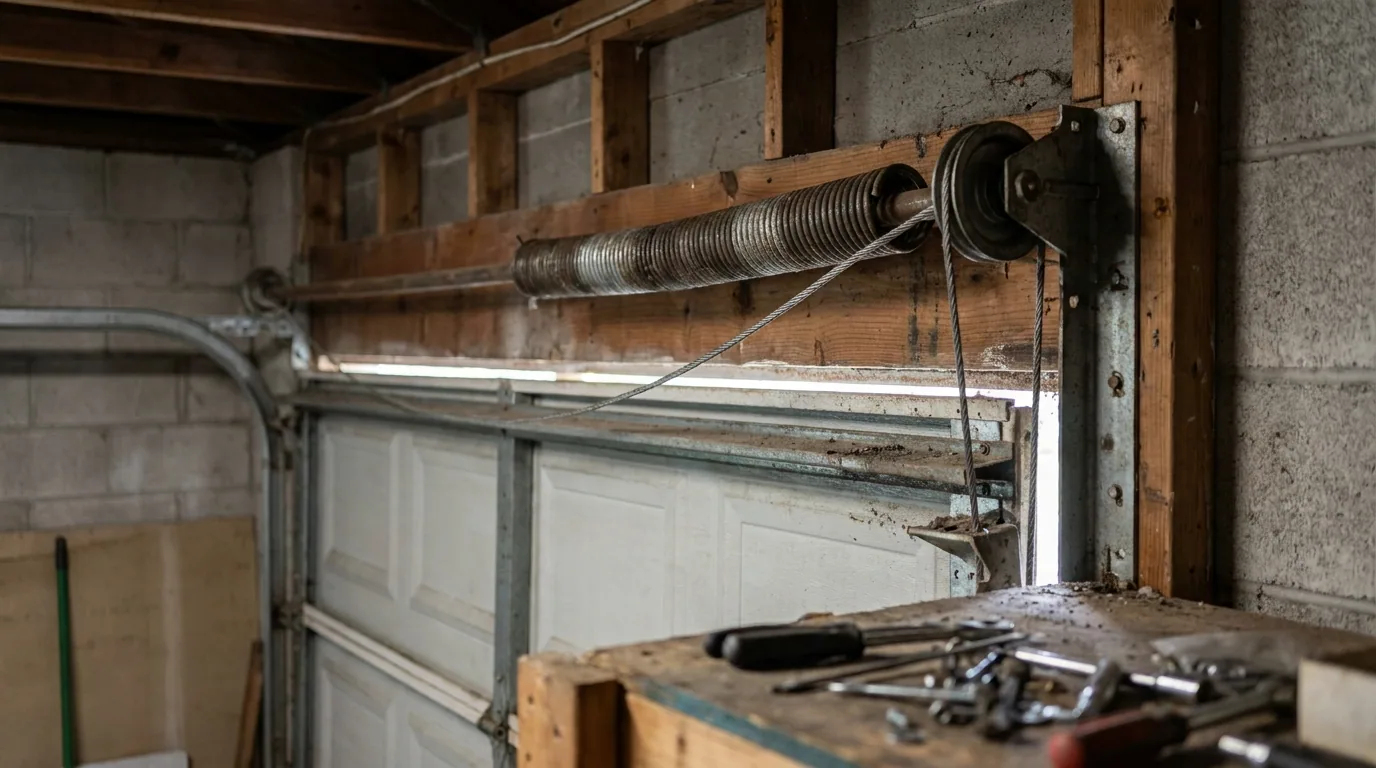
Salt is corrosive to steel, and a garage door is mostly steel. The torsion springs above the door, the cables that run down each side, the drums at the ends of the shaft, and the hinges that join the panels are all exposed to the air in the garage, and on the coast that air is humid and salty much of the year. Corrosion on a spring or a cable is not cosmetic. A cable that has lost material to rust is weaker than the one it was rated for, and a spring that has pitted is more likely to fail at a point where the wire has thinned.
The parts that move against each other suffer first. Hinges, rollers, and the pivot points at the bottom corners are where friction and salt meet, and that is where a door starts to feel stiff or to make a new sound at the start of a cycle. The track is also affected, particularly along the lower sections where splash and damp air reach it.
What you can safely notice from outside the door
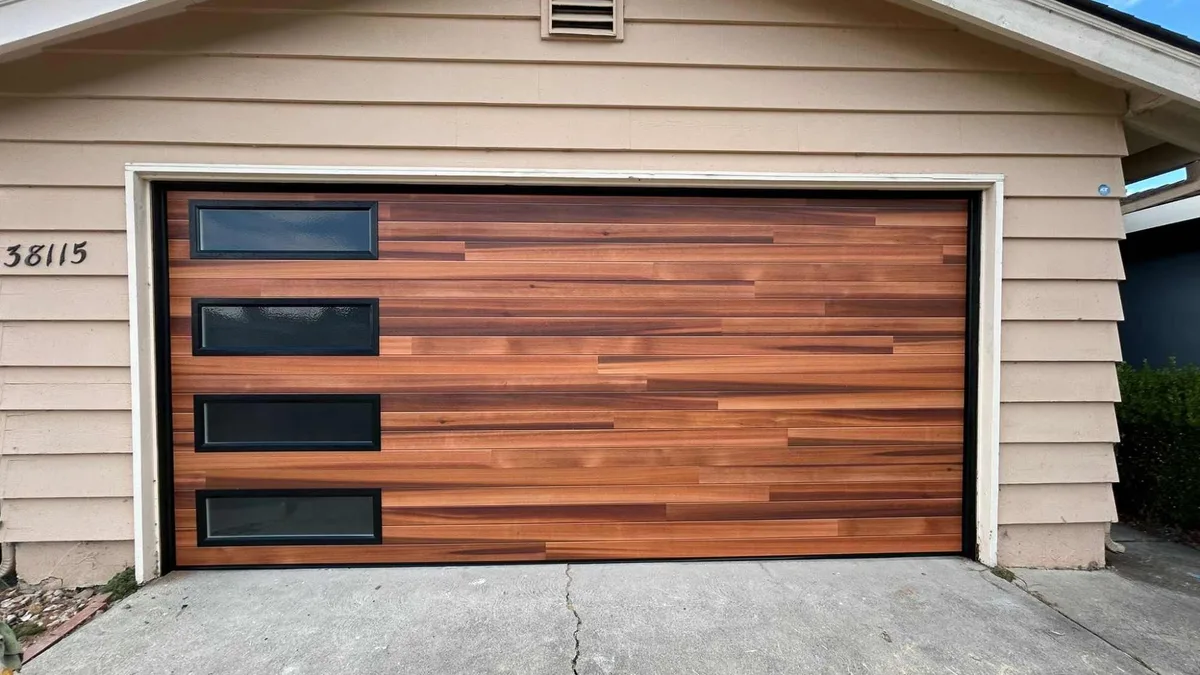
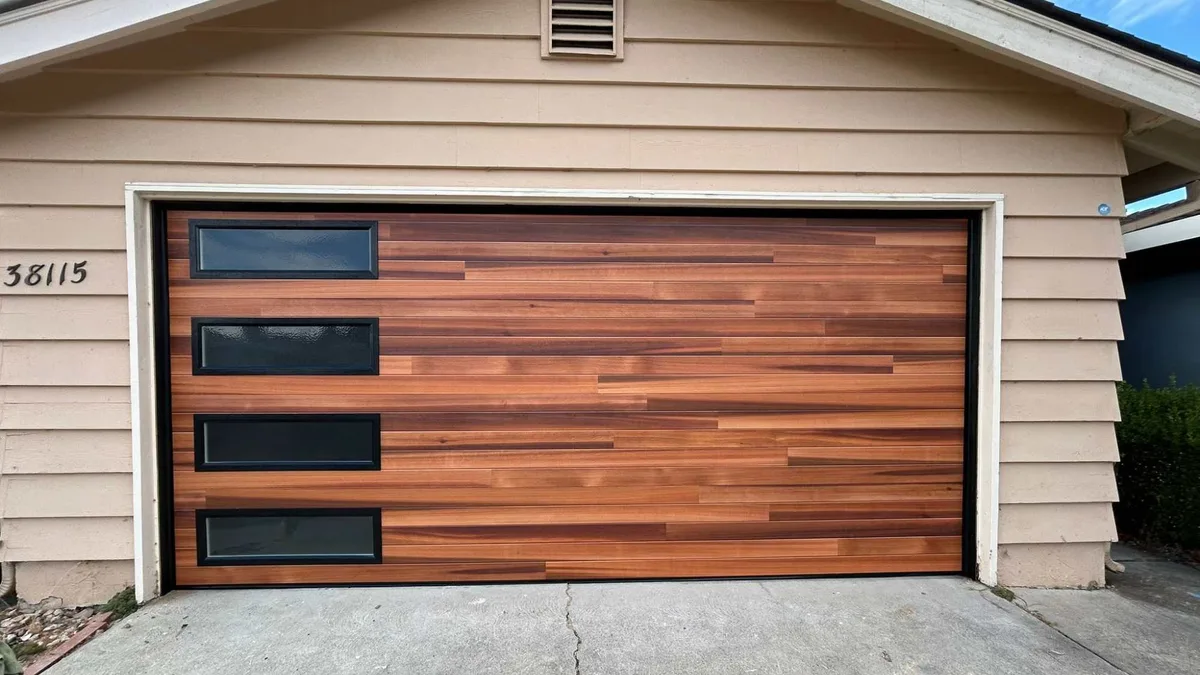
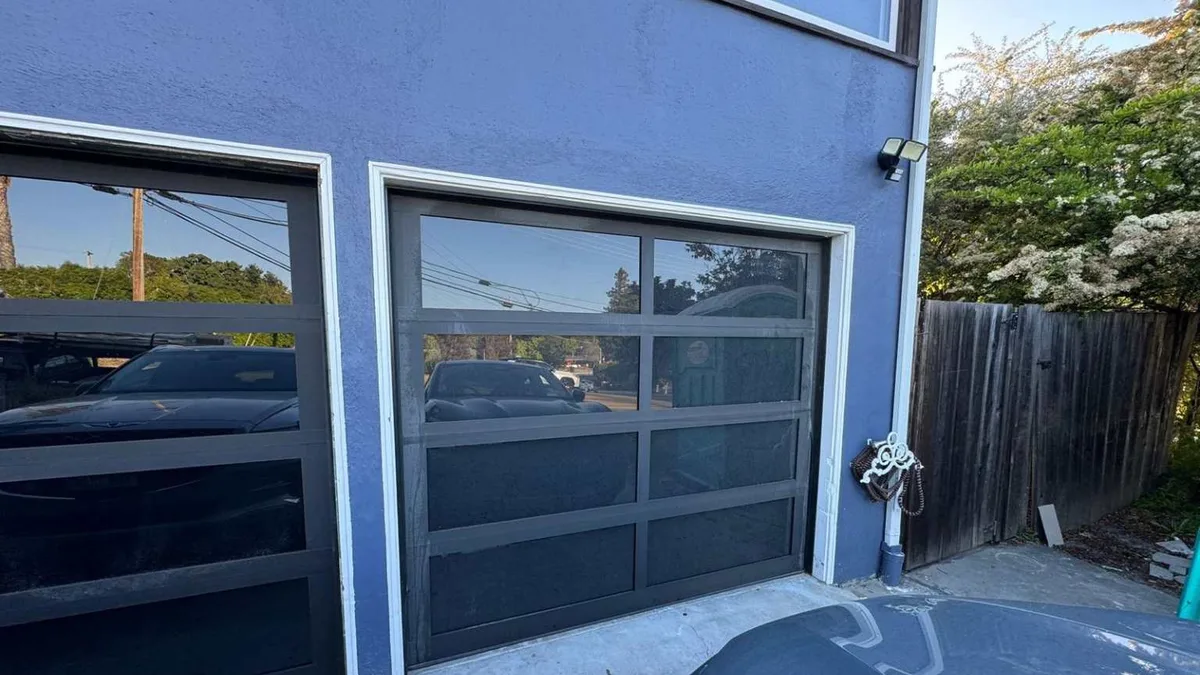
You do not need to touch the springs or the cables to get useful information. With the garage empty and the door closed, stand back and look at the door as a whole. A door that sits crooked in the opening, with one side higher than the other, is telling you something. So is a gap along the top of the door that was not there before, or a door that no longer meets the floor evenly across its width.
During normal use, pay attention to how the door feels and sounds. A door that feels heavier than it used to when you open it with the wall control, or that hesitates before it starts moving, is worth a call. A new squeal, a grinding sound, or a rattle that appears at the same point in every cycle is also useful information. Write down when you hear it and whether it happens on the way up, on the way down, or both. That detail helps a technician narrow the cause before anyone arrives.
What you should not do is inspect the springs or cables yourself, or try to move the door by hand to check its balance. Those parts are under load, and the checks a technician performs on them require the right tools and the right sequence. The same goes for the opener drive train.
Why a crooked door has more than one possible cause
A door that hangs at an angle is a symptom, not a diagnosis. On a torsion-spring door, a snapped cable on one side will let that corner drop, and the door will hang visibly out of square. A broken spring can also leave the door unable to hold its position evenly. A bent or misaligned track can bind one side of the door and produce a similar look. Each of these has a different repair, and the test that separates them is different too.
A technician checks the cables and springs directly, confirms whether the door is square in the opening, and runs the door to see where it binds. That is how a snapped cable is told apart from a bent track. If your door is crooked, do not run the opener repeatedly to see if it will straighten out. Stop using the door and call for service.
Noises, stiffness, and the limits of guesswork
A squeal or a grind can come from a roller, a hinge, or a dry bearing, and the same sound can have more than one source on the same door. A technician separates them by lubricating and testing one component at a time and by listening at the door rather than from the house. If the noise is louder in the morning or after a stretch of damp weather, that is worth mentioning, but it does not by itself identify the part. The useful move is to describe the sound and when it happens, not to decide in advance what is causing it.
The same applies to a door that feels heavy. A door that is noticeably harder to move than it used to be may have a spring that has lost tension, a cable that is binding, or a roller that has seized. The technician confirms which by checking the spring tension and the cable travel together, not by lifting the door by hand.
What routine service looks like on the coast
On Hutchinson Island and the rest of the Treasure Coast, a service visit is partly about wear and partly about corrosion. A technician inspects the springs and cables for corrosion and wear, checks the drums and the cable wind, and confirms the door is balanced and square. Hinges, rollers, and pivot points are lubricated with a product suited to a humid, salty environment. The track is checked for alignment and for rust along the lower sections. The opener is tested for travel limits and force settings, and the safety reversal is confirmed.
If a spring or cable has corroded to the point where it should be replaced, the technician will say so and explain why. Replacing a cable before it snaps is a different job from repairing a door after it has dropped, and the difference is usually visible to a technician well before it is obvious to the homeowner.
If your door is crooked, noisy, or feels heavier than it should, call Torsion Pro Garage Doors at (561) 225-1433 or email info@torsionpro.com. The company serves Hutchinson Island and the surrounding Treasure Coast, is licensed and insured, and offers emergency service outside normal hours. Describing what you see and hear when you call helps the technician arrive prepared.