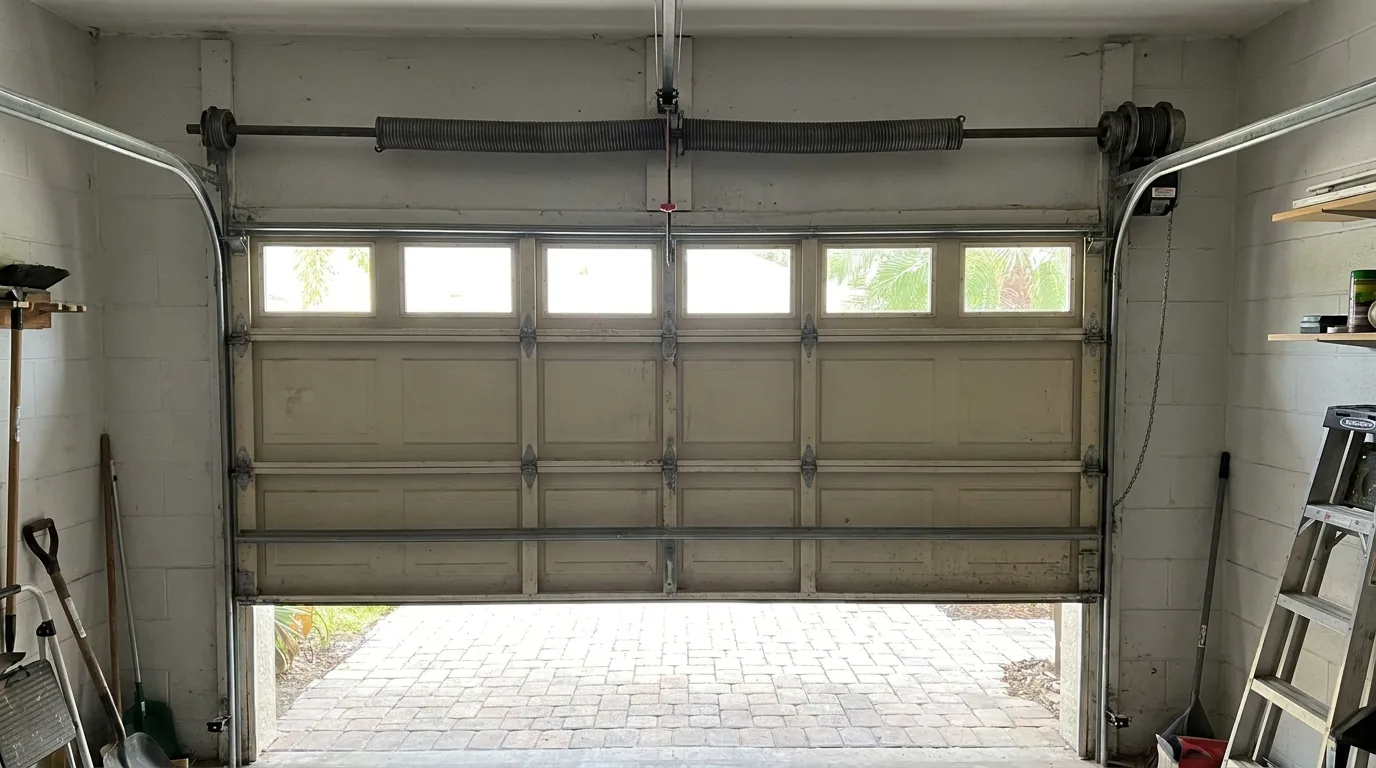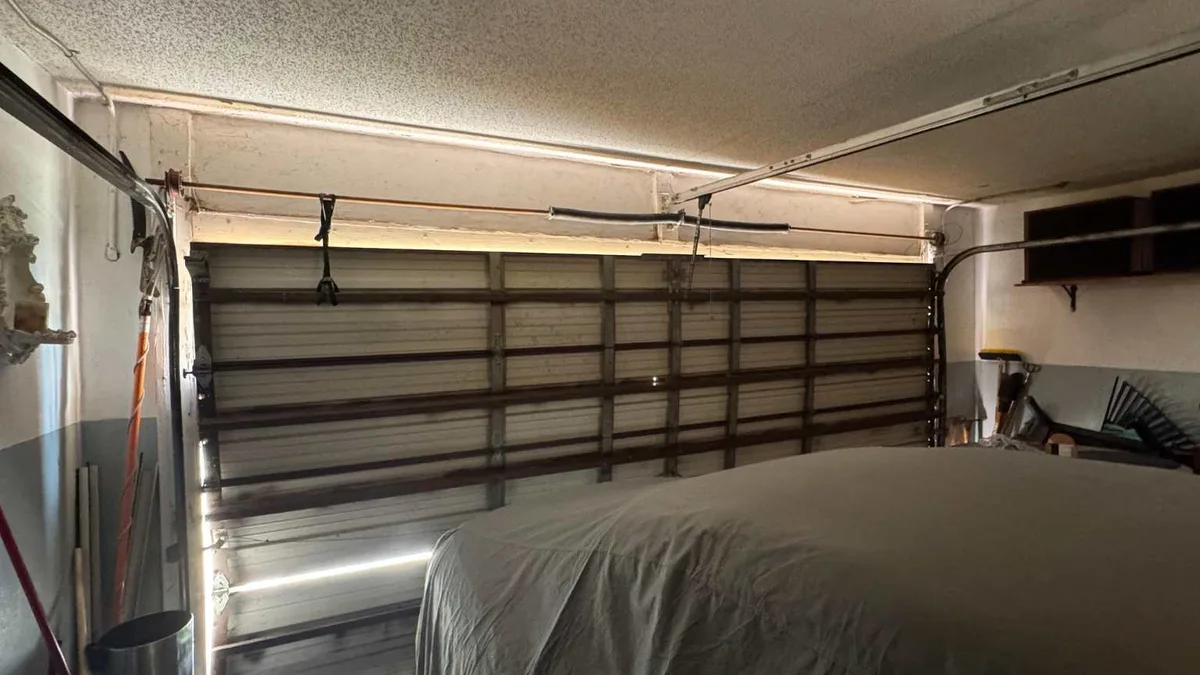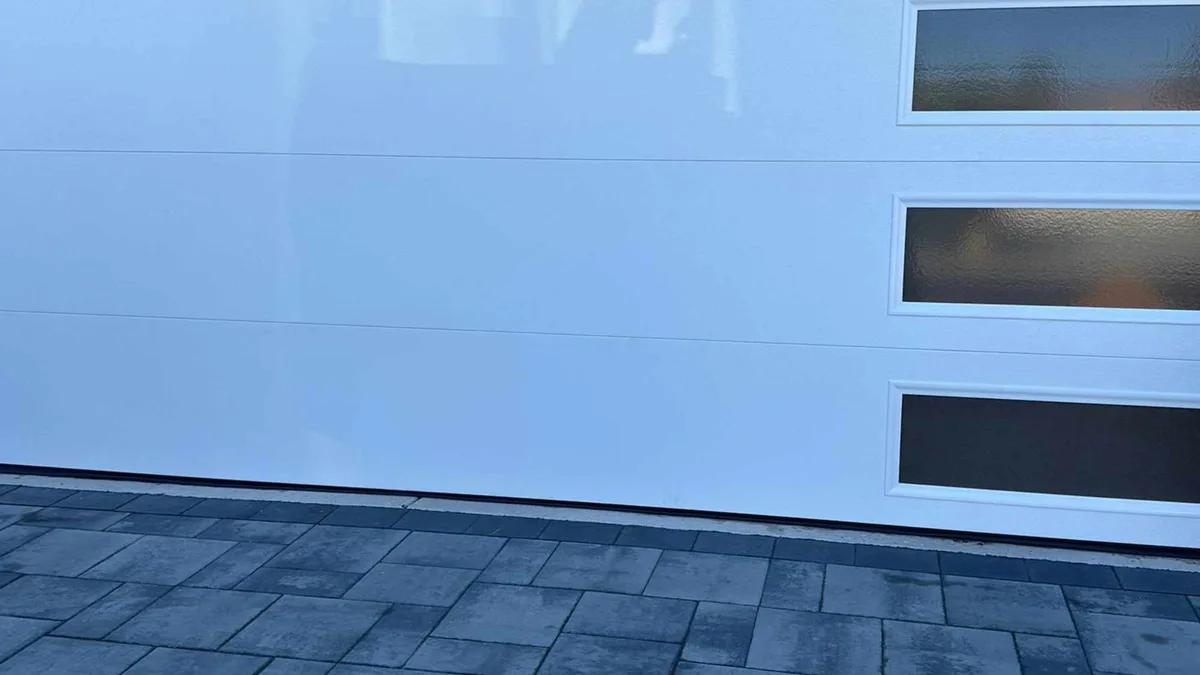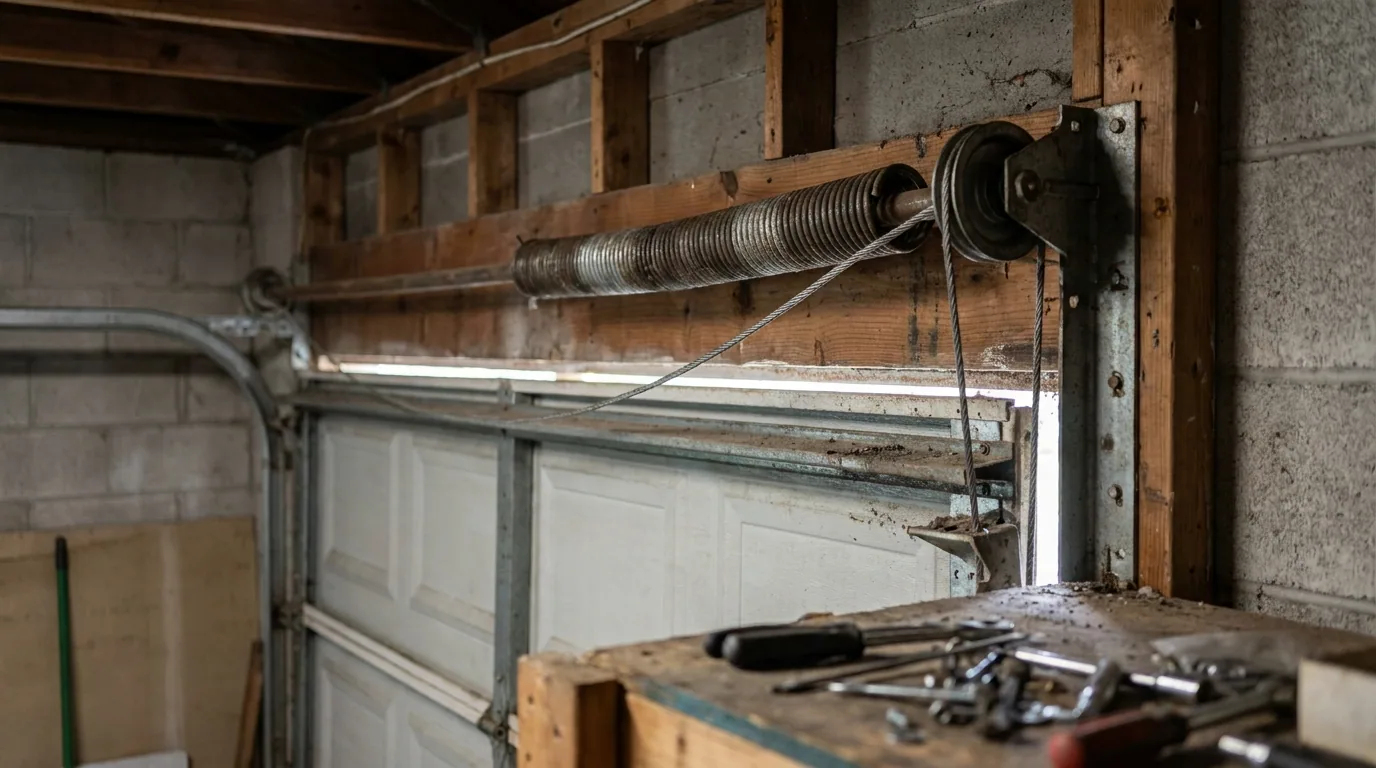
A torsion spring is the part of a garage door system that holds the door's weight, and its installation is not something you can judge by watching the door go up and down a few times. A spring that was installed with the wrong wind, the wrong number of turns, or hardware that was not tightened to the right torque can work normally for weeks or months before something gives. That is why a correct installation is verified through specific checks, not by whether the door happened to open on the first try. Here is what a technician looks at when confirming a spring was installed correctly, and what a homeowner can safely notice from outside the door.
The spring has to match the door, not just fit the shaft
Torsion springs come in different wire sizes, inside diameters, and lengths, and each combination produces a specific amount of lifting force at a specific number of turns. A spring of the right length but the wrong wire gauge will either hold too little of the door's weight or too much, and the door will behave accordingly. The technician confirms the spring was selected for the door's actual weight and track configuration, not simply swapped for one that looked similar to what came off.
This matters because a spring that is too weak leaves the opener doing work it was never meant to do, and a spring that is too strong makes the door hard to close and puts extra strain on the cables, drums, and hinges. Neither problem announces itself immediately. Both show up as wear somewhere else in the system.
Winding direction and the number of turns
A torsion spring is wound in a specific direction, and the two springs on a standard two-spring door are wound opposite each other. Install a spring with the wrong wind and it will not hold the door at all, or it will hold it in the wrong direction. The technician confirms the wind direction against the drum and cable routing before the spring is tensioned.
The number of turns is the other half of the installation. The spring is tensioned by turning the winding cone a set number of quarter turns, and that count is calculated from the spring's dimensions and the door's height. Too few turns and the door will feel heavy in normal use and may not stay up on its own. Too many turns and the door will want to rise, the cables will carry more load than they should, and the spring will run closer to its limit every cycle. The technician sets the turns by the calculation, then verifies the result against how the door actually behaves.
What the technician checks after the spring is tensioned
Once the spring is wound, the installation is not finished until several things are confirmed. The technician checks that the winding and stationary cones are secure, that the set screws are seated and tight, and that the center bearing and shaft are aligned so the spring is not binding as it turns. A spring that is slightly out of line with the shaft will wear at the bearing and can make noise at the start of every cycle.
The cables and drums are checked next. The cables should be seated in the drum grooves and wound evenly, with no crossover. The technician also confirms the door's balance by raising and lowering it with the opener disconnected, which is work that belongs to a technician and not to a homeowner. A correctly installed spring leaves the door balanced at the midpoint, staying where it is put without drifting up or down.
Finally, the technician runs the door through several full cycles and checks the travel limits and force settings on the opener. A spring change alters the load the opener sees, and the opener's settings need to reflect the new condition.
What you can safely notice from outside the door
You do not need to inspect the spring, the cables, or the opener drive train to know something may be wrong. With the garage empty and the door operated normally, a few things are visible and audible from the driveway:
- The door sits crooked when fully closed, with one bottom corner lower than the other.
- A gap appears along the top of the door when it is closed.
- The door feels heavier than it used to during normal use.
- A new noise appears at the start of a cycle, or the door pauses partway up.
- The opener motor runs but the door does not move.
Each of these has more than one possible cause. A crooked door can come from a snapped cable, a broken spring, or a bent track. A new noise at the start of a cycle can come from a roller, a hinge, or a dry bearing. A motor that runs without lifting the door can point to a stripped opener gear, a broken spring, or a disconnected trolley. The technician separates these by testing each one, and the tests are not ones a homeowner should perform.
When to call a technician
If you have just had a spring replaced and the door does not feel the way it did before, or if you notice any of the signs above, the right move is to have the installation checked rather than to wait and see. A spring that was installed correctly should leave the door balanced, quiet, and easy to operate by hand once the opener is disconnected, and the technician confirms that before the job is considered complete.
Torsion Pro Garage Doors works on broken spring replacement, torsion spring replacement, snapped cable repair, and the balance and track work that goes with them, across the Treasure Coast of Florida. The business is licensed and insured. If you are in Fort Pierce, Port St. Lucie, Vero Beach, Stuart, Jensen Beach, Hutchinson Island, Sebastian, Palm City, Lakewood Park, or White City, you can reach the office at (561) 225-1433 or info@torsionpro.com. Weekday hours are 7:00 AM to 7:00 PM, weekend hours are 8:00 AM to 6:00 PM, and emergency service is available.